
Extended Reality (XR) experiences depend heavily on realism — not just in environments, but in the characters who populate them. Whether it’s a patient inside a medical simulation, a trainee avatar in a procedural walkthrough, or a virtual teammate inside collaborative training, the human element defines how believable and emotionally engaging an XR experience feels. This is where Metahuman Creator becomes transformative.
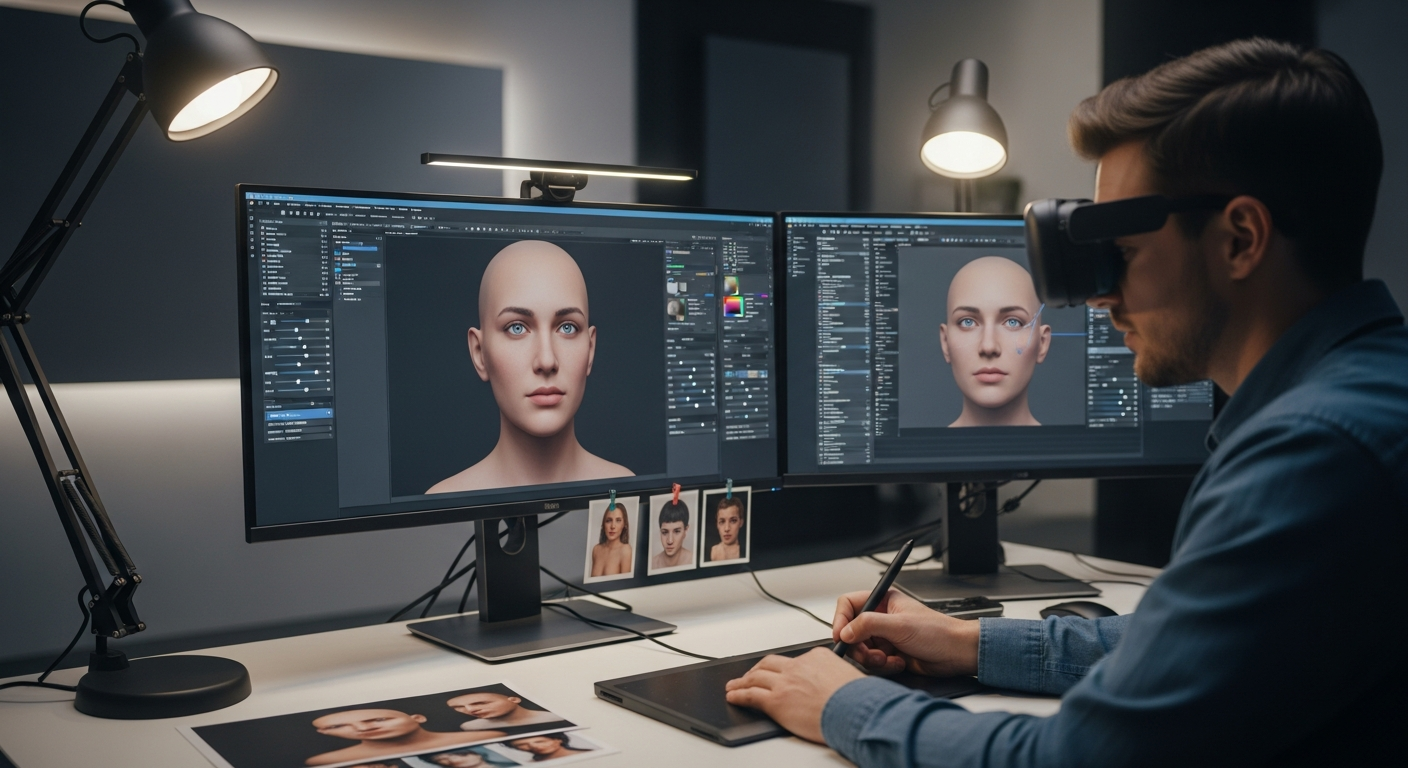
Metahuman Creator enables studios, enterprise teams, and training developers to build hyper-realistic digital humans quickly and consistently. Instead of spending weeks modeling, rigging, texturing, and animating characters, XR teams can generate lifelike avatars that move naturally, express emotion, and integrate directly into interactive simulations. These avatars elevate training scenarios by enhancing emotional presence, improving learner engagement, and making simulated interactions feel authentic.
This guide explores how Metahuman Creator empowers XR teams, why realistic avatars matter for training and simulation, and how organizations use these digital humans to create powerful immersive workflows.
Why Realistic Avatars Matter in XR Training?
XR training thrives when users feel immersed — and nothing disrupts immersion faster than rigid, unnatural characters. High-quality avatars play an essential role in:
emotional realism
communication accuracy
social cue recognition
behavioral training
roleplay practice
simulation credibility
This emotional grounding aligns with the principles of immersive technology fundamentals, where natural interaction is the core of meaningful XR experiences.
Realistic avatars improve:
empathy in patient simulations
confidence in communication-based training
trainee motivation
immersion inside high-stakes scenarios
accuracy during behavioral assessment
Real people learn best when interacting with believable digital people.
What Metahuman Creator Offers to XR Teams?
Metahuman Creator democratizes digital character creation by providing:
high-fidelity face models
photorealistic skin textures
strand-based hair systems
pre-built facial rigs with 50+ controls
motion-ready body rigs
accurate eye tracking & expressions
scalable LOD (Level of Detail) presets
These features eliminate painful manual character development pipelines and allow teams to focus on simulation design, training logic, and interactivity.
Metahuman strengths for XR developers:
Rapid iteration
Consistent visual quality
Compatibility with Unreal Engine
Seamless integration with mocap
Facial animation accuracy
Large character libraries for varied scenarios
For enterprise clients using Mimic XR services, Metahumans significantly reduce production time and elevate project realism.
Faster Production Workflows for Simulation Teams
Traditional digital human pipelines involve several labor-intensive steps:
sculpting
retopology
UV wrapping
texturing
rigging
blendshape creation
facial deformation testing
Metahuman Creator bypasses all of this.
XR teams can generate a ready-to-animate digital human in minutes, not weeks.
Production benefits include:
accelerated prototyping
easier experimentation
reduced outsourcing costs
consistent quality across large teams
rapid deployment for multiple simulations
This speed is vital for organizations rolling out training workflows across departments or industries.
Realistic Emotion Enhances Behavioral and Communication Training
Many XR simulations rely on roleplay, soft-skill development, and realistic emotional interaction. Metahuman avatars excel in these use cases due to their expressive facial rigs and natural movement.
Behavioral training examples:
patient communication
conflict resolution
customer service
leadership development
mental health de-escalation
emergency conversation scenarios
These interactions require micro-expressions, eye movement, and emotional nuance — all achievable through Metahumans.
Seamless Integration With Motion Capture
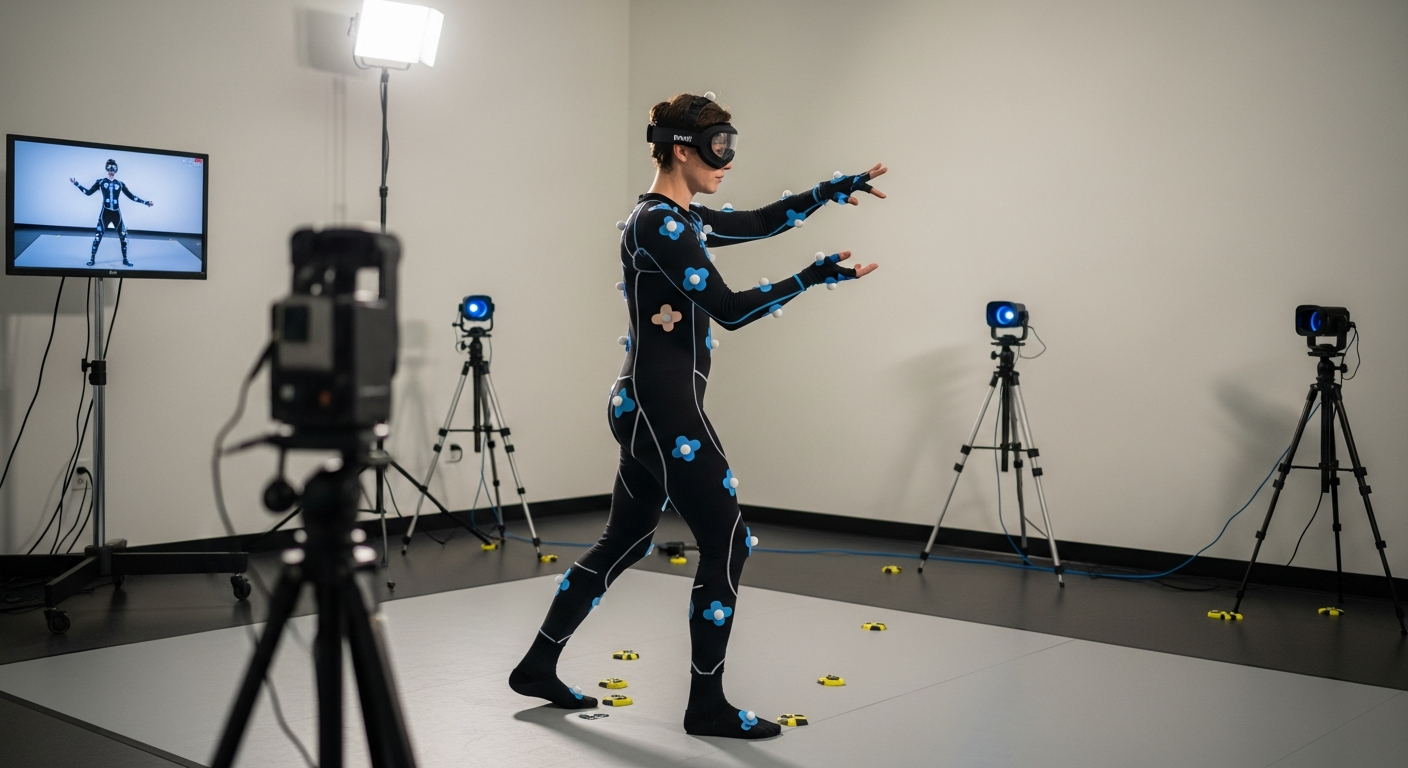
Metahuman Creator is designed to be mocap-ready, enabling teams to capture human performance and apply it directly to avatars.
Motion capture helps creators build scenarios with:
realistic body language
natural hand gestures
smoother conversational timing
more believable procedural motions
emotional depth
When integrated with the MR workflows described in mixed reality blending concepts, these avatars perform consistently inside hybrid environments.
Scaling Character Diversity for Large XR Deployments
Organizations running large XR platforms need multiple distinct characters for:
patient cases
learners/trainees
instructors
teammates
virtual workforce models
multi-user training simulations
Metahuman Creator supports this through high customizability:
skin tones
facial structures
hairstyles
body types
age variation
cultural attributes
This diversity is crucial for realistic training environments and inclusive learning.
Improving Simulation Accuracy With Digital Twins
Some XR projects incorporate digital twins — precise virtual replicas of real people for assessment, training, or modeling.
Metahuman Creator assists in building accurate digital humans that align with real-world anatomy or appearance, supporting extended reality workflows used across organizations.
Digital twin use cases:
patient-specific training
workforce modeling
safety simulations
ergonomic assessment
personalized instruction
Metahumans enhance visual fidelity while digital twin systems manage the data layer.
Role in High-Stakes XR Training Scenarios
Metahuman avatars create believable environments for:
emergency simulations
medical procedures
industrial safety walkthroughs
hazardous operations
fire response practice
construction safety
Because users emotionally respond to realistic avatars, these simulations deliver stronger impact and improved retention.
Real-Time Interaction Through AI + Metahuman Integration
When combined with generative AI, Metahumans can become interactive agents capable of:
real-time conversation
adaptive responses
scenario branching
emotional interpretation
roleplay personalization
This turns XR training into a two-way conversational experience instead of a scripted exercise.
AI-driven Metahumans will soon act as:
instructors
evaluators
assistants
teammates
virtual patients
This will define next-generation simulation design.
Use Cases Across Industries
While Metahuman Creator is widely used in entertainment, enterprise XR teams leverage it for:
Healthcare
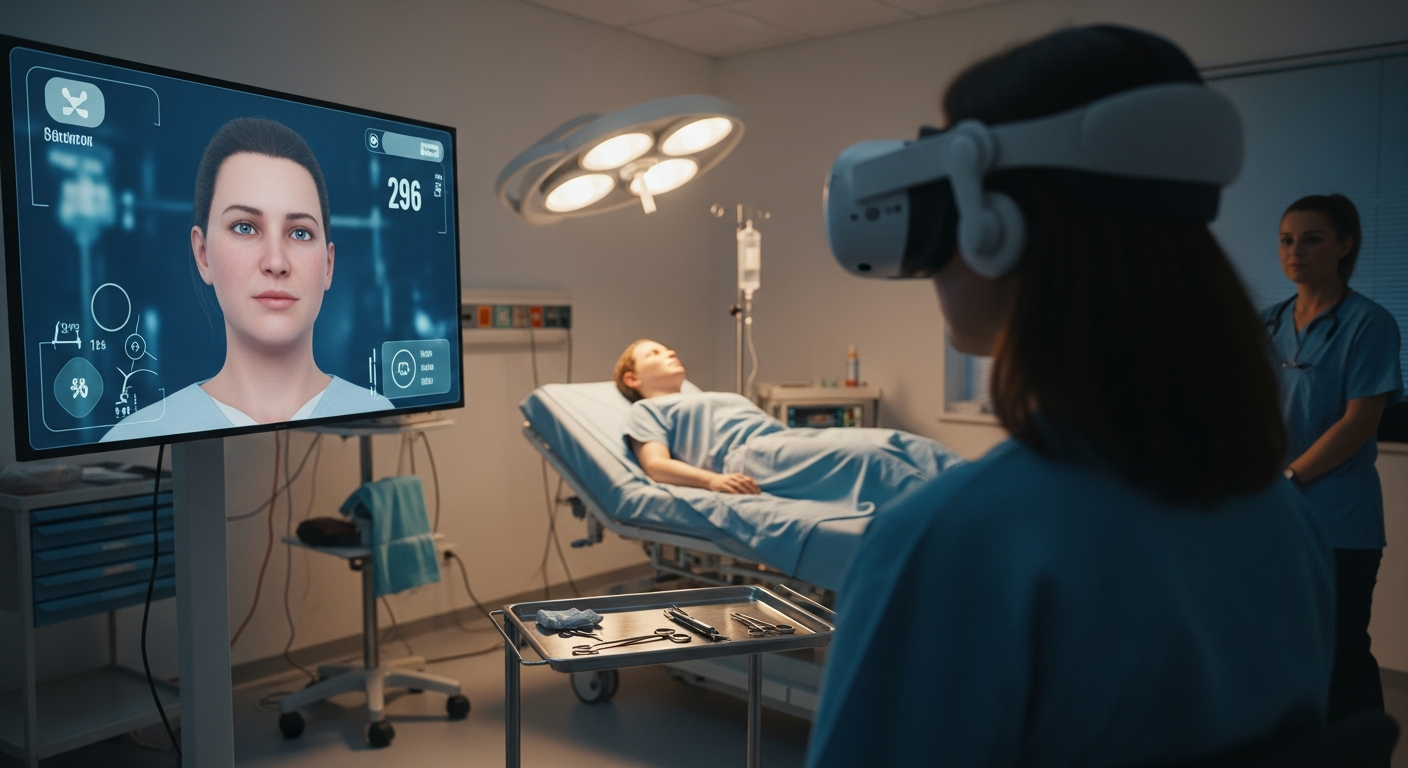
patient simulations
communication exercises
procedural rehearsals
Manufacturing
virtual workforce modeling
safety demonstrations
Education
interactive teachers and digital mentors
Corporate Training
customer service scenarios
soft-skill development
Defense
tactical team simulations
situational awareness training
Realistic digital humans improve training effectiveness across all sectors.
Future of Metahuman-Based XR Training
As XR and AI evolve, Metahuman avatars will become:
more autonomous
more expressive
more personalized
better at emotional understanding
fully integrated with digital twins
optimized for lightweight devices
part of persistent XR workplaces
Expect training to feel more human, more adaptive, and more situationally intelligent.
Conclusion
Metahuman Creator has become a game-changing tool for XR development, enabling teams to build realistic, expressive, and diverse digital humans at unprecedented speed. These avatars enhance immersion, emotional authenticity, communication training, and procedural accuracy across XR workflows. When combined with motion capture, AI, digital twins, and spatial computing, Metahumans help organizations deliver training simulations that feel real — and generate real-world impact.
With deep expertise in XR simulation, performance capture, and enterprise training environments, Mimic XR supports organizations using Metahuman-powered workflows to elevate employee performance, improve learning outcomes, and strengthen operational readiness.
FAQs
1. Why does XR training need realistic avatars?
Realism improves immersion, emotional engagement, and communication accuracy.
2. Can Metahumans be customized?
Yes — Metahuman Creator supports extensive customization for appearance and proportions.
3. Do Metahumans work with mocap?
Absolutely — they are designed for seamless motion capture integration.
4. Are Metahumans used for digital twins?
They can represent highly realistic digital humans inside digital-twin workflows.
5. What industries benefit from Metahuman-based XR?
Healthcare, manufacturing, education, defense, and corporate training.
6. Do Metahumans support real-time interaction?
Yes — especially when paired with AI-driven dialogue and behavior systems.
7. Is Metahuman Creator suitable for enterprise-scale XR projects?
Yes — the tool allows rapid creation of consistent, high-fidelity characters.
8. What is the future of Metahuman in XR?
AI-enabled emotional understanding, real-time instruction, and adaptive simulation behavior.