
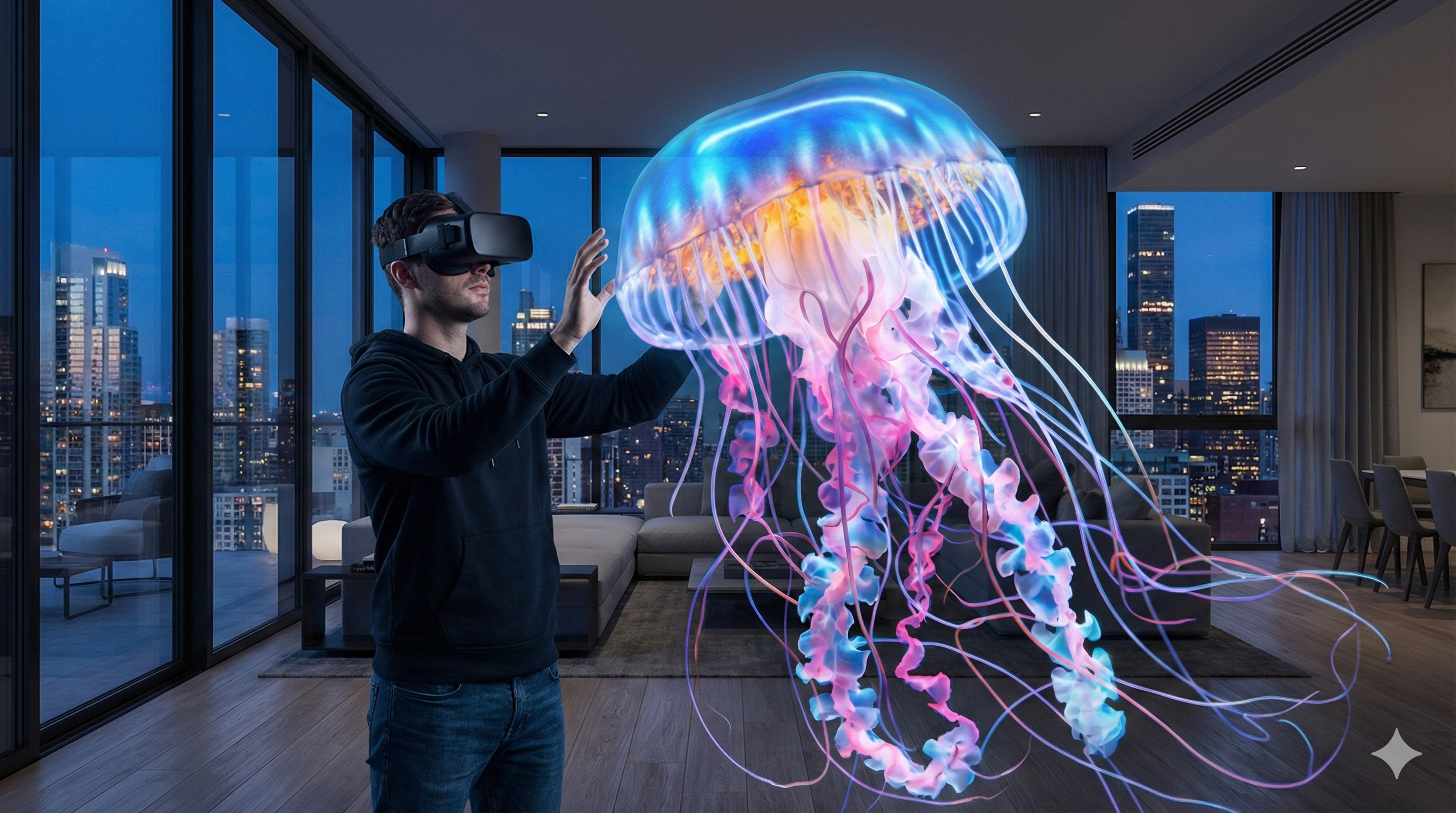
Most training fails for the same reason. It feels like school. Static modules, passive watching, and abstract tests disconnect learning from real action. Gamified learning changes that by shifting training into lived experience. People learn by doing, failing safely, and progressing through challenges that feel purposeful rather than instructional.
Inside XR, gamified learning becomes less about points and badges and more about presence. Custom worlds, believable scenarios, and responsive systems create training that feels closer to a mission than a lesson. This is where immersive training begins to outperform traditional formats, especially when skills, behavior, and decision-making matter.
At Mimic XR, we approach gamified learning as a production discipline, not a surface layer. It draws from real-time engines, cinematic environments, and smart avatars to create training experiences that feel intuitive, grounded, and human. For a deeper foundation on how these experiences sit inside the wider XR landscape, this overview of extended reality workflows is a useful starting point.
Table of Contents
Why does traditional training feel like school?
What gamified learning really means in XR?
Game mechanics that improve retention and performance
XR workflows that make training feel natural
Comparison of traditional training vs XR-based gamified learning
Applications across industries
Benefits
Considerations for teams
Future outlook
Conclusion
FAQs
Why does Traditional Training Feel Like School?
Traditional training relies on abstraction. Slides describe scenarios. Videos show outcomes. Quizzes test recall rather than judgment. This creates distance between learning and real performance.
Gamified learning removes that distance by embedding knowledge inside action.
Cognitive load: Learners struggle to translate theory into practice when context is missing.
Emotional disengagement: Flat content rarely triggers curiosity or motivation.
Delayed feedback: Mistakes are corrected after the fact, not in the moment they matter.
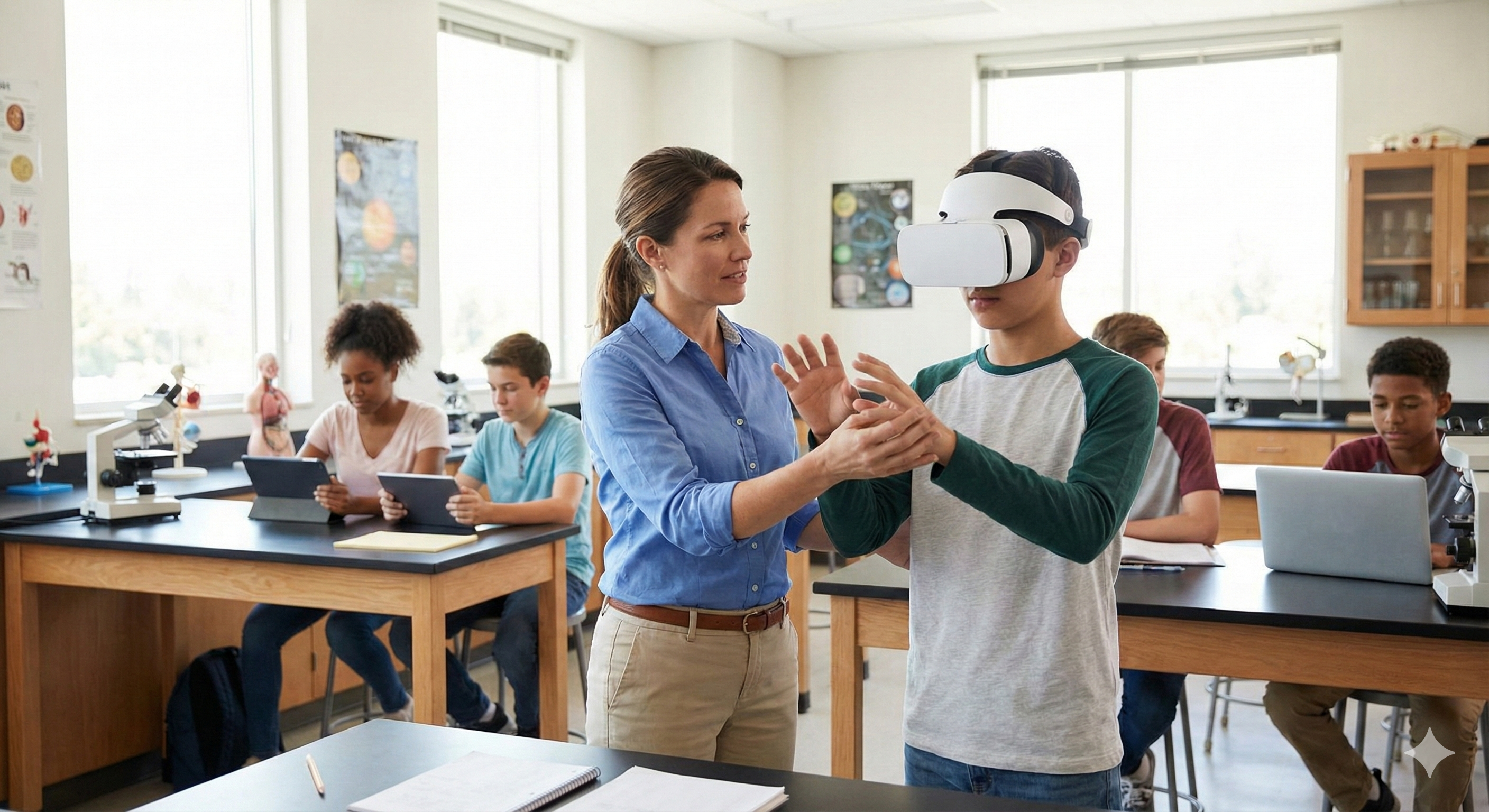
XR allows interactive learning to happen in the same spatial and emotional frame as real work. When learners move, decide, and react inside a simulated environment, learning stops feeling academic.
What Gamified Learning Really Means in XR?
In XR, gamified learning is not about turning training into a video game. It is about structuring experience around progression, consequence, and agency.
Short introduction paragraphs are replaced by spatial onboarding. Instructions emerge through interaction rather than text. Success is felt through environmental response, not scores.
Embodied learning: Knowledge is tied to movement, spatial memory, and physical decision-making.
Contextual objectives: Tasks exist within believable scenarios, not abstract challenges.
Narrative flow: Training unfolds with purpose, tension, and resolution.
This approach aligns naturally with experiential learning, where understanding is built through experience rather than explanation.
Game Mechanics That Improve Retention and Performance
When designed carefully, game mechanics support learning instead of distracting from it.
Progression systems: Skills unlock new capabilities or environments, reinforcing mastery.
Immediate feedback: Environments react instantly to decisions, reinforcing cause and effect.
Risk-free failure: Learners can make mistakes without real-world consequences.
Adaptive difficulty: Challenges adjust based on performance, keeping engagement balanced.
In XR, these mechanics are grounded in real-time engines and spatial logic. The learner does not feel tested. They feel involved.
XR Workflows That Make Training Feel Natural
The success of gamified learning depends on production quality as much as design intent. Poor visuals or awkward interaction break immersion quickly.
Effective XR training workflows focus on:
Cinematic environments: Spaces are designed for clarity, mood, and performance, not decoration.
Smart avatars: AI-driven NPCs respond believably to speech, gesture, and proximity.
Natural interaction: Hand tracking, gaze, and spatial audio replace menus and buttons.
Optimized performance: Stable frame rates preserve comfort and presence.
These workflows often combine photogrammetry, motion capture, and real-time optimization to create environments that feel grounded and responsive. This article on photogrammetry explains how real-world capture supports lifelike XR training.
Comparison of Traditional Training vs XR-Based Gamified Learning
Aspect | Traditional Training | XR-Based Gamified Learning |
Engagement | Passive consumption | Active participation |
Feedback | Delayed and abstract | Immediate and contextual |
Risk | Real-world or hypothetical | Safe simulated environments |
Retention | Low to moderate | High through embodied experience |
Motivation | Compliance-driven | Curiosity and mastery-driven |
Applications Across Industries
Gamified learning scales across sectors where skills, behavior, and decision-making matter.
Training: Risk-free simulations for safety, operations, and leadership.
Manufacturing: Procedural learning inside realistic virtual environments.
Retail: Product knowledge through interactive spatial scenarios.
Museums and culture: Learning through exploration and narrative.
Customer support: Scenario-based practice with smart avatars.
XR allows these experiences to run across AR, VR, and MR depending on context. This comparison of VR, AR, and MR workflows helps clarify where each fits best.
Benefits
The impact of gamified learning is measurable when designed correctly.
Higher retention: Memory anchors form through action and emotion.
Faster skill acquisition: Learners practice instead of observe.
Consistent training: Scenarios standardize learning across teams.
Increased confidence: Familiarity reduces hesitation in real-world tasks.
Considerations For Teams
Adopting XR-based gamified learning requires practical planning.
Hardware constraints: Device selection affects interaction and fidelity.
Onboarding: First-time XR users need intuitive entry points.
Content operations: Scenarios must be updateable and scalable.
Deployment strategy: Decide where AR, VR, or MR best fits daily workflows.
Teams that treat XR as infrastructure rather than novelty see stronger long-term results.
Future Outlook
The future of gamified learning lies in convergence. Smart avatars become more conversational. Environments adapt in real time. AI systems personalize pacing and feedback per learner.
Cinematic XR worlds will increasingly support multiplayer collaboration, cross-device access, and persistent learning spaces. As XR ecosystems mature, immersive training will feel less like scheduled sessions and more like ongoing spatial practice.
Conclusion
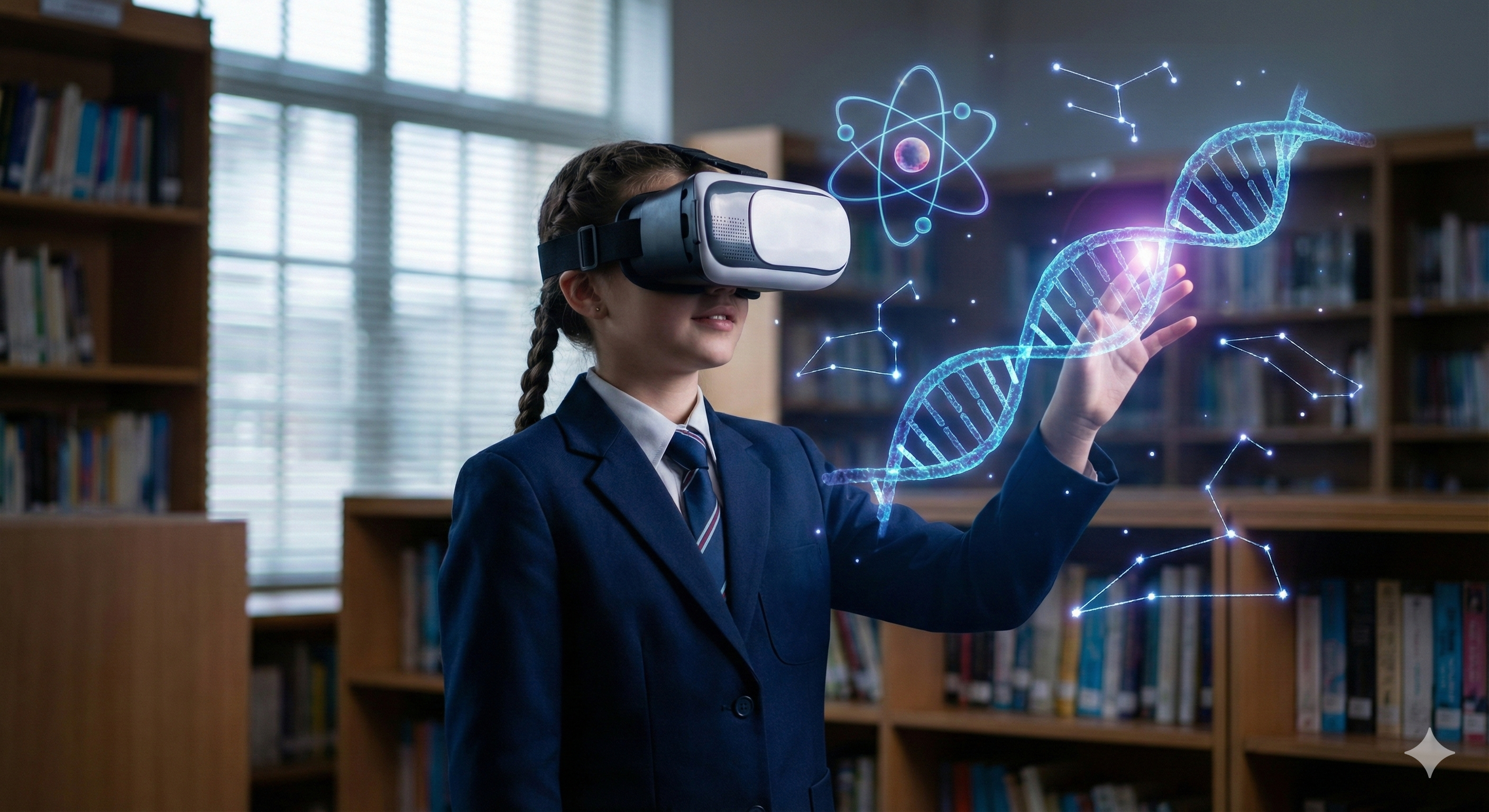
Gamified learning works because it respects how humans actually learn. Through action, emotion, and consequence. XR makes this possible at scale by blending cinematic environments, smart avatars, and real-time interaction into training that feels purposeful rather than instructional.
When training no longer feels like school, people stay engaged. They remember more. They perform better. That is the real value of XR-driven gamified learning, not as entertainment, but as a lived experience.
FAQs
What makes gamified learning different from traditional e-learning?
It embeds learning inside action and decision-making instead of passive content consumption.
Is gamified learning only effective in VR?
No. AR and MR support contextual, on-the-job learning where full immersion is not required.
Does gamified learning require game-like visuals?
No. It requires clear interaction, progression, and feedback, not playful aesthetics.
How long does it take to build XR-based gamified learning?
Timelines vary based on complexity, interaction depth, and content scale.
Can gamified learning support serious enterprise training?
Yes. It is particularly effective for safety, operations, and behavioral training.
How do smart avatars improve gamified learning?
They provide believable interaction, guidance, and feedback within scenarios.