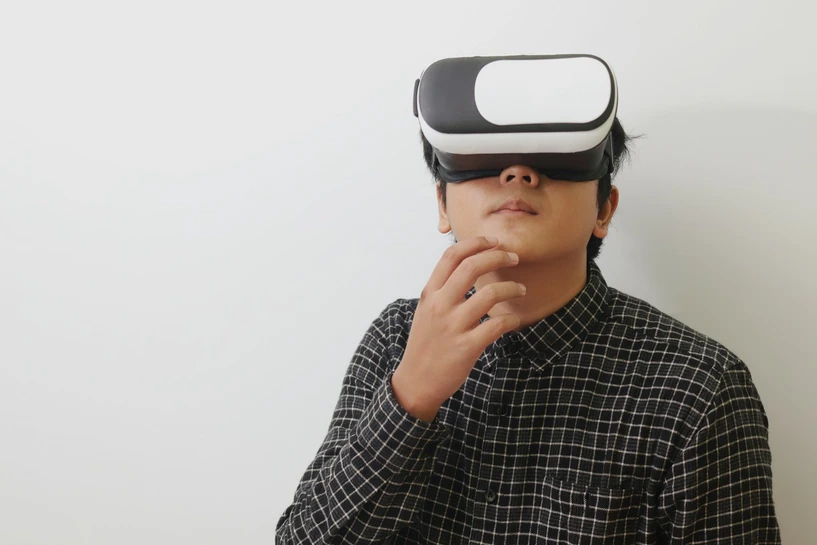
Enterprises with distributed workforces face a major challenge. Training is inconsistent, standards vary across locations, and teams often develop different interpretations of the same procedure. Virtual reality training solves this by delivering unified, repeatable, and immersive training experiences that look identical no matter where employees are based.
VR training is now being deployed across manufacturing, healthcare, aviation, energy, logistics, customer support, and corporate operations. Instead of relying on slide decks, classroom lectures, or irregular workshops, VR allows employees to learn within realistic 3D environments where they perform tasks, make decisions, and follow procedures exactly as expected in the real world.
This article explores how enterprises use virtual reality training to standardize skills, reduce errors, and build more capable global teams.
Table of Contents
What is virtual reality training?
Why do enterprises rely on VR for global skill standardization?
How does VR create consistency across training programs?
Immersive environments that replicate real-world conditions
Skill assessment through real-time performance tracking
How VR reduces training costs for global teams?
Building safety awareness with high-risk scenario training
Integrating VR with enterprise workflow systems
Cross-location collaboration inside shared VR environments
Challenges enterprises should plan for
Conclusion
FAQs
What is virtual reality training?
Virtual reality training is a learning method that places employees inside 3D environments where they complete tasks, operate equipment, practice procedures, and develop decision-making skills through immersive interaction. Instead of reading instructions, trainees gain hands-on experience through simulated real-world conditions.
VR training follows many of the immersive principles described in Mimic XR technology workflows, where spatial learning and realistic simulation strengthen long-term retention.
Enterprises use VR for both technical and soft skill development.
Why do enterprises rely on VR for global skill standardization?
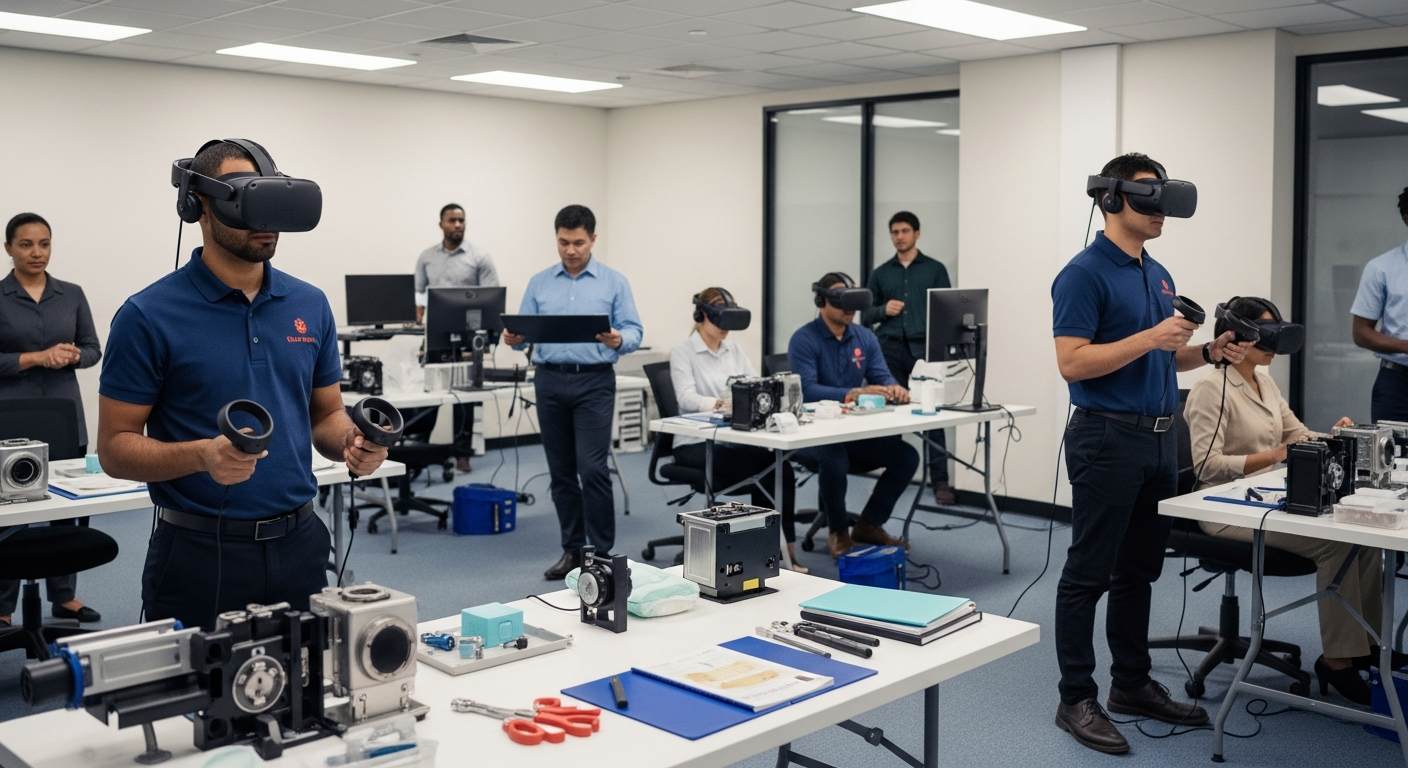
When a company operates across different cities or countries, traditional training formats often vary widely. VR training solves this by delivering the same experience to every employee, regardless of location.
Benefits include:
Consistency becomes scalable across thousands of employees.
How does VR create consistency across training programs?
VR modules follow precise workflows designed by subject matter experts.Every trainee completes the same tasks, in the same order, with the same standards.
VR ensures:
no skipped steps
no instructor variation
standardized feedback
unified voice instructions
uniform scenario difficulty
This is especially valuable when training complex procedures such as equipment calibration, clinical tasks, inspection routines, or emergency response.
Training consistency mirrors the benefits seen in immersive AR-based workflows used to support clinicians and students through augmented reality guidance systems.
Immersive environments that replicate real-world conditions
VR creates controlled training environments that feel realistic and interactive. This helps employees practice without real-world consequences.
Enterprises simulate:
manufacturing floors
repair sites
medical facilities
aviation cabins
warehouse aisles
heavy machinery operation
customer service environments
emergency response zones
Realistic simulation increases confidence and reduces the time needed to transition from training to on-the-job performance.
Skill assessment through real-time performance tracking
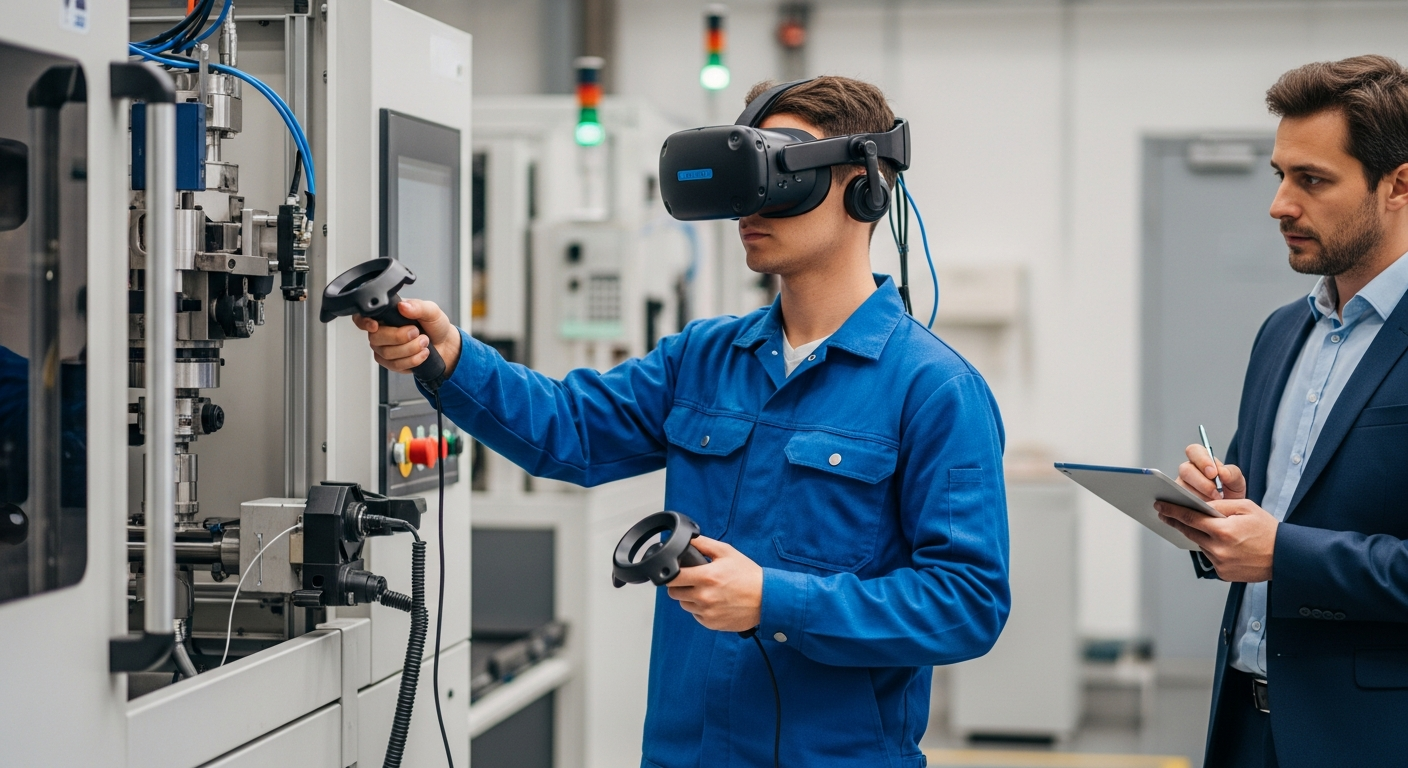
One of the strongest reasons enterprises use VR training is the ability to capture measurable performance data.
VR training tracks:
accuracy
timing
safety compliance
critical errors
procedural flow
decision sequences
task completion rates
This data allows enterprises to certify employees with objective standards rather than subjective instructor judgment.
The same idea supports medical accuracy improvements inside digital twin-based planning systems, where structured insights improve real decision-making.
How VR reduces training costs for global teams?
Enterprises spend significant resources on:
travel for trainers
repeat workshops
equipment downtime
training facilities
printed materials
instructor hours
VR reduces these costs by:
removing travel needs
allowing reusable training modules
cutting equipment wear
supporting self paced learning
enabling remote instructor sessions
For global teams, the savings are multiplied across regions.
Building safety awareness with high-risk scenario training
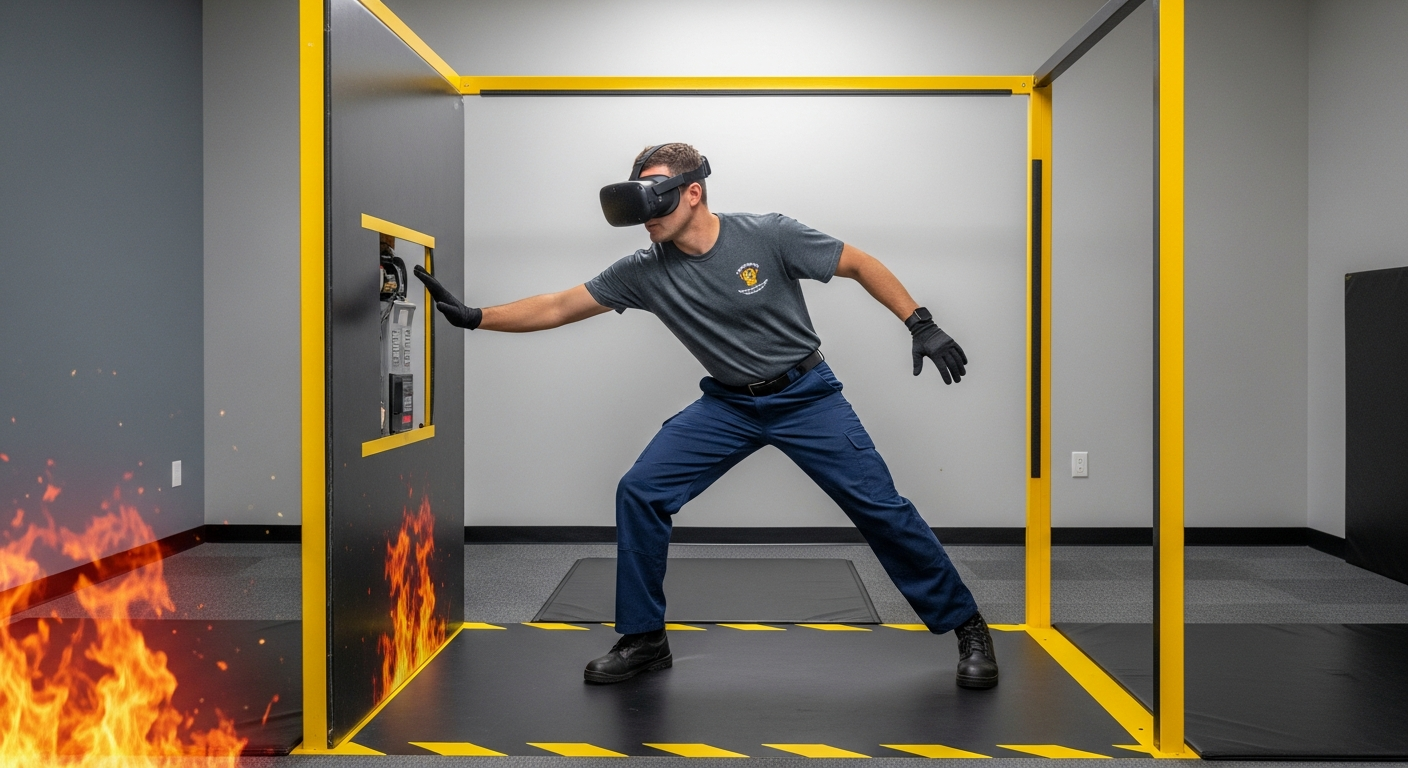
VR prepares employees for dangerous or high-pressure situations that cannot be practiced in real life.
Examples include:
fire response
hazardous materials leaks
mechanical failures
emergency shutdown procedures
electrical safety errors
confined space navigation
patient critical events in clinical settings
Companies have seen stronger retention and fewer safety incidents after adopting VR training.
These high-risk simulations resemble the immersive practice used by transportation teams in VR emergency training for mobility operations.
Integrating VR with enterprise workflow systems
VR becomes more powerful when connected with enterprise systems such as:
LMS platforms
certification trackers
workflow dashboards
digital manuals
real world equipment sensors
AI based recommendation engines
Enterprises benefit when VR training becomes part of daily operations instead of a separate activity.
Cross-location collaboration inside shared VR environments
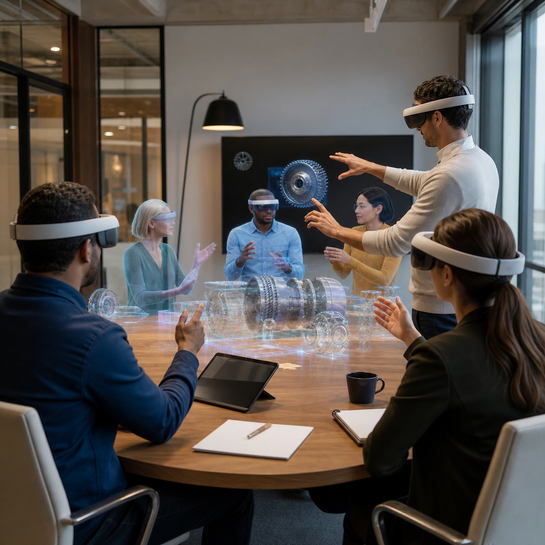
VR can place employees from multiple countries in the same virtual space. They can practice together, solve problems, or receive guidance from remote instructors.
Shared VR helps enterprises with:
team cohesion
communication skills
complex scenario planning
procedural synchronization
leadership development
VR collaboration accelerates global alignment.
Challenges enterprises should plan for
Enterprises adopting VR should consider:
headset comfort
content update schedules
clear onboarding
calibration accuracy
hardware storage and maintenance
scenario realism that matches real workflow
Most challenges reduce as hardware improves and content libraries expand.
Conclusion
VR training is helping enterprises standardize skills across global teams by offering consistent, realistic, and measurable learning experiences. Through immersive simulation, interactive tasks, and real-time performance feedback, VR ensures that all employees, regardless of geographic location, gain the same proficiency and confidence. As businesses face rising complexity, VR becomes a strategic tool that improves safety, quality, and operational performance.
Mimic XR supports enterprise organizations with virtual training solutions that combine spatial learning, simulation accuracy, and workflow alignment to build skilled, synchronized teams worldwide.
FAQs
1. What makes VR training more effective than traditional methods?
VR offers hands-on, repeatable learning with high realism and consistent instruction.
2. Can VR standardize skills across global teams?
Yes. VR delivers identical training experiences to employees anywhere in the world.
3. Does VR reduce enterprise training costs?
VR minimizes travel, equipment downtime, and repeated instructor sessions.
4. What kinds of skills can be taught through VR?
Technical tasks, safety protocols, soft skills, equipment operation, and emergency response.
5. How does VR improve safety?
It allows employees to practice hazardous scenarios without risk.
6. Can VR integrate with enterprise training systems?
Yes. VR can connect to LMS platforms, dashboards, and workflow tools.
7. Is VR useful for remote teams?
VR supports collaborative sessions and shared simulation environments.
8. Will VR replace in-person training entirely?
No. VR enhances training by adding realism and consistency, but does not replace hands-on experience.