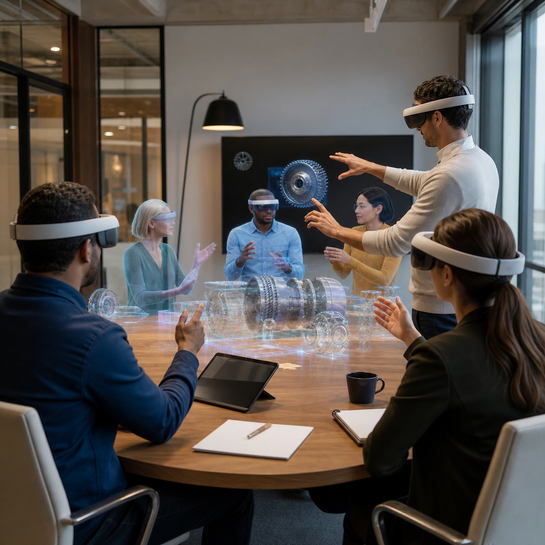

Enterprise XR has moved beyond experimental demos. For teams planning headset pilots, digital twins, immersive training, spatial product visualization, or mixed reality collaboration, the real question is no longer whether spatial computing is impressive. The real question is whether it can become a repeatable business workflow with clear owners, reusable assets, measurable outcomes, and a path from first pilot to daily adoption. Mimic XR sits in that practical layer, where creative production, technical implementation, and operational planning need to work together instead of living in separate conversations.
A spatial computing strategy gives that work structure. It defines which use cases deserve investment, what content and 3D assets are required, how users will be trained, what risks must be controlled, and how the business will know whether the launch worked. Without that structure, XR projects often become isolated showcases. With it, a pilot can become a scalable system for sales enablement, employee training, product education, remote assistance, design review, and customer experience.
Table of Contents
What Spatial Computing Strategy Means

Spatial computing strategy is the operating plan that connects immersive technology to a business outcome. It is broader than choosing a headset or commissioning a 3D scene. A useful strategy defines the user journey, the physical environment, the digital assets, the interaction model, the measurement plan, and the governance process. It asks where spatial computing can reduce friction, improve comprehension, speed up a decision, lower training risk, or create a more memorable product experience. The answer should be specific enough that a production team can build against it and a business team can evaluate it.
For enterprise teams, the most effective XR strategies usually start with a narrow but meaningful workflow. That might be a sales team explaining a complex product, a manufacturing group rehearsing a safety procedure, a healthcare team simulating patient movement, or a design group reviewing a spatial layout before construction. The workflow matters because it keeps the project from drifting into novelty. A headset experience that looks impressive but does not solve a defined user problem is difficult to maintain. A workflow that removes a real bottleneck is easier to fund, improve, and scale.
This is also where internal linking should feel natural. A reader exploring XR planning may want to review Mimic XR services or compare related immersive examples before speaking with a production team. Links should support the reader at the moment they need more context, not interrupt every paragraph with sales language.
Why Enterprise XR Adoption Needs a Roadmap

Enterprise adoption fails when the first experience is treated as the finish line. A roadmap keeps the organization focused on what happens before, during, and after launch. Before launch, teams need asset audits, user research, hardware assumptions, security review, accessibility planning, and executive agreement on goals. During launch, they need onboarding, facilitation, support, feedback capture, and analytics. After launch, they need a process for content updates, new scenarios, user retraining, and performance reporting. Without these steps, even a technically strong XR build can stall because nobody owns the operating model.
A roadmap also protects teams from overbuilding. Spatial computing can support many ideas, but not every idea deserves a full immersive deployment. Some projects only need a web-based 3D viewer. Some need guided video. Some need a browser demo before a headset version. The roadmap should identify the right level of immersion for each business goal. That discipline is especially important when stakeholders are excited by the technology and want to add features before the main workflow has been validated.
A strong roadmap also defines adoption roles. The product owner decides the goal, subject-matter experts approve accuracy, designers control interaction quality, engineers protect performance, legal or compliance teams review sensitive claims, and analytics owners confirm how success will be measured. When these roles are named early, review cycles become faster and the final experience is less likely to feel fragmented.
Choosing Use Cases That Can Scale

The best use cases share three traits: they are painful enough to matter, visual enough to benefit from spatial context, and repeatable enough to justify a system. A one-time event can still be valuable, but long-term ROI usually comes from workflows that repeat across locations, customers, employees, products, or training cohorts. Sales enablement is a good example. If teams repeatedly explain the same complex object, environment, or transformation, a spatial experience can make the explanation clearer and more consistent. Training is another strong case because safe repetition is often expensive or risky in the real world.
Pick a workflow where misunderstanding creates cost, delay, risk, or lost conversion.
Choose a scenario where scale matters, such as repeated training, demos, or customer onboarding.
Prioritize experiences that can reuse 3D assets, scripts, analytics events, and facilitation notes.
Avoid use cases where immersion adds spectacle but does not improve the decision or skill outcome.
Teams should score candidate use cases before production. Useful criteria include audience size, frequency, complexity, asset readiness, safety impact, revenue impact, training impact, and operational ownership. A high-score use case becomes the first pilot. Lower-score ideas can remain in a backlog until the organization has reusable infrastructure. This prevents the first XR project from carrying every possible ambition at once.
Building the Asset and Data Foundation
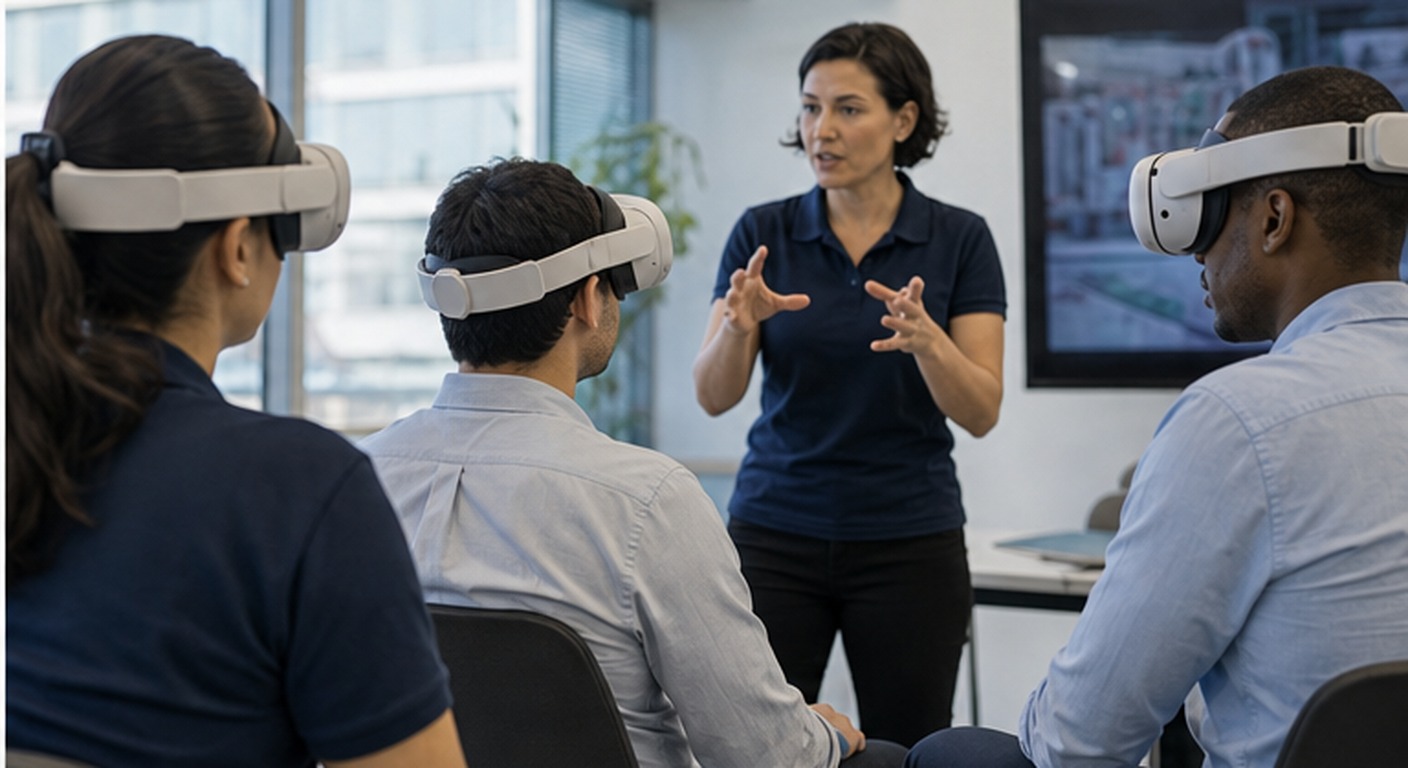
The asset foundation determines whether an XR program becomes efficient or exhausting. Spatial experiences need source models, product details, environment references, safety rules, copy, voice guidance, interaction notes, localization requirements, and version control. Teams should separate durable assets from campaign-specific materials. Durable assets include product models, brand rules, approved claims, training objectives, interface patterns, and analytics events. Campaign-specific materials include launch copy, event messaging, seasonal offers, temporary scenes, and audience-specific calls to action.
Data planning matters just as much. If the goal is training, the system may need completion rates, assessment scores, confidence surveys, and incident data. If the goal is sales, the team may track session completion, feature interactions, demo requests, qualified leads, or assisted conversion. If the goal is operations, the team may track task time, error reduction, support tickets, or handoff quality. Metrics should be chosen before production so interactions can be designed around them instead of added as an afterthought.
This foundation also supports governance. Enterprise teams need clear rules for accessibility, privacy, safety, device hygiene, content approval, and user support. If AI assistants or adaptive content are part of the experience, the governance model should define what data is used, what the system can say, where human escalation is required, and how updates will be reviewed. These decisions make the experience more trustworthy and easier to maintain.
Measuring Adoption and Business Value
Measurement should connect the immersive experience to the original business reason for building it. For sales, that may mean improved product understanding, stronger meeting follow-up, shorter explanation time, or more qualified demo requests. For training, it may mean faster time to competency, fewer mistakes, better recall, higher completion, or improved confidence. For operations, it may mean reduced support burden, fewer field errors, improved remote collaboration, or faster design review cycles. The right metric depends on the use case, but the principle stays the same: measure behavior and outcomes, not only views.
Adoption metrics are equally important. A launch can produce positive reactions while still failing to become a habit. Track who uses the experience, how often they return, where they drop off, what content they replay, and which teams request new scenarios. Qualitative feedback should sit beside analytics because XR often reveals workflow issues that numbers alone do not explain. Facilitators, trainers, sales teams, and support staff can identify moments where the experience creates clarity or confusion.
The final step is turning evidence into a repeatable playbook. Document the best-performing scenes, prompts, scripts, visual standards, device settings, onboarding steps, accessibility notes, and reporting templates. That playbook lets the next project start from a stronger foundation. It also gives leadership a clearer reason to keep investing: the organization is not buying isolated XR assets; it is building a spatial computing capability.
FAQ
What is spatial computing strategy?
It is the plan that connects XR, 3D content, interaction design, user training, data, governance, and measurement to a clear business outcome.
How should a company choose its first XR use case?
Start with a workflow that repeats often, has measurable friction, benefits from spatial understanding, and has a clear owner who can support adoption after launch.
Why do XR pilots fail to scale?
They usually fail when teams skip ownership, training, asset reuse, analytics, maintenance planning, or governance. The pilot launches, but no system exists around it.
What should be measured after launch?
Measure adoption, completion, return use, interaction quality, business outcomes, user confidence, training performance, sales assists, and operational efficiency depending on the use case.
Conclusion
Spatial computing strategy works when it turns immersive technology into a repeatable business system. The strongest programs begin with a specific workflow, prepare reusable assets, define governance, train users, and measure outcomes beyond first impressions. For enterprise teams, that discipline is what separates an impressive demo from a capability that supports sales, learning, operations, and customer experience over time. To plan the next step, explore Mimic XR contact options and use this roadmap as a practical checklist before the next pilot begins.