


How do you choose an extended reality development company that can turn an ambitious idea into a useful, scalable experience?
The right partner does more than build an impressive XR demo. It connects a business objective to the correct combination of virtual reality, augmented reality, mixed reality, real-time 3D, spatial interfaces, smart avatars, and measurable interaction design. That connection is what separates a short-lived showcase from an experience people can actually use.
This guide explains how to assess an extended reality development company before you commit to a project. It covers discovery, platform choice, creative and technical capability, content pipelines, pilot planning, adoption, measurement, and the questions that reveal whether a studio is prepared for production rather than presentation.
Table of Contents
Define the Business Problem Before You Contact a Studio

A capable XR partner should begin with the problem, audience, and operating context—not a headset recommendation. Before requesting proposals, describe the moment you want to improve. It might be a technician practicing a hazardous repair, a buyer exploring a complex product, a distributed design team reviewing a full-scale model, or an audience entering a cinematic story.
Clarify what currently makes that moment difficult. Common constraints include expensive travel, limited access to equipment, inconsistent instruction, safety risks, abstract product information, slow stakeholder decisions, or a shortage of experienced trainers. These details give the studio something concrete to solve and help it decide whether immersion is genuinely appropriate.
Mimic XR’s portfolio spans virtual world development, simulations, product visualization, and character-driven experiences. Those services may use similar technology, but they require different interaction patterns, content assets, performance targets, and measures of success. A strong discovery process identifies those differences before production begins.
Prepare a short brief that covers the target users, task, setting, available source material, required integrations, device constraints, launch geography, accessibility needs, and desired business outcome. You do not need to prescribe every feature. You do need to give the development company enough operational context to challenge weak assumptions and recommend a focused first release.
Match the XR Format to the User’s Real Environment
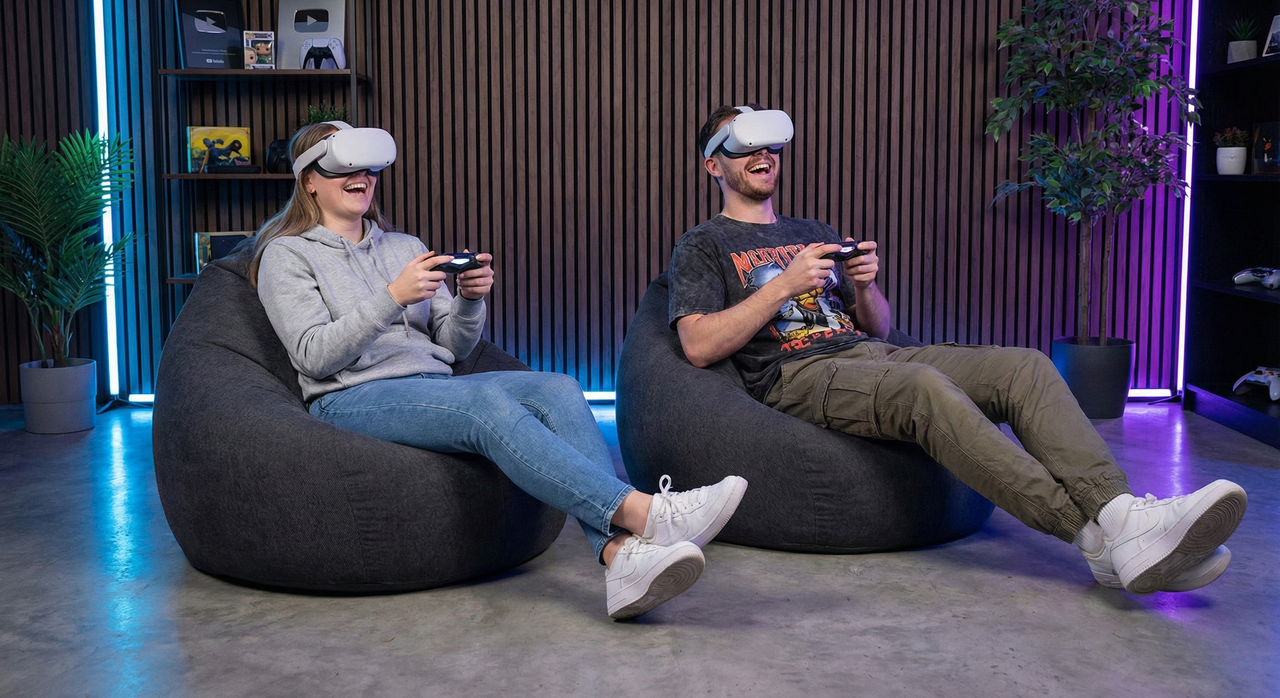
Extended reality is an umbrella for several formats, and the best choice depends on what the user must see, touch, hear, and do. Virtual reality works well when the real environment must disappear so a learner or player can enter a controlled world. Augmented reality is useful when guidance, products, or information should appear over a real space. Mixed reality is valuable when digital objects must remain spatially anchored and interact with people or physical surroundings.
An experienced studio should explain this decision in plain language. For example, full immersion may suit XR game development or emergency rehearsal, while mobile AR may be more accessible for a product preview. Head-mounted mixed reality can support hands-free work instructions or collaborative design review, but only if comfort, field of view, tracking, battery life, hygiene, and device management fit the workplace.
Ask whether the experience must run on a standalone headset, tethered system, mobile device, web browser, projection setup, or several platforms. Cross-platform reach can increase adoption, but it also changes visual fidelity, interaction design, testing, and maintenance. The development company should make those tradeoffs visible instead of promising identical performance everywhere.
The same discipline applies to deployment conditions. A factory floor has different lighting, connectivity, safety, and noise constraints than a classroom or trade-show booth. A public installation needs fast onboarding and durable interaction design. A home experience needs simple setup and broad device compatibility. The correct XR format is the one that survives the user’s real environment.
Evaluate Technical and Creative Capability Together

XR sits at the intersection of software engineering, real-time art, spatial design, storytelling, user research, and systems integration. A company can be excellent at one discipline and still struggle to deliver the whole experience. Review the team as a connected production unit rather than judging it only by a highlight reel.
On the technical side, look for experience with real-time engines, performance optimization, device SDKs, networking, analytics, identity, content management, security, and integration with business systems. If the project involves XR training simulations, ask how the team models branching decisions, feedback, assessment, instructor controls, repeat attempts, and data export. For multiuser experiences, ask how it handles synchronization, voice, permissions, and unreliable connections.
On the creative side, assess environment design, lighting, animation, character performance, sound, narrative structure, and the clarity of spatial cues. Photorealism can be valuable for product, medical, industrial, or human-centered work, but realism must serve the task. Overly detailed scenes can reduce performance, distract learners, or increase maintenance costs.
Request examples that resemble your intended scale and risk level. A polished entertainment demo does not automatically prove readiness for regulated training, and an industrial prototype does not automatically prove cinematic storytelling ability. The best evidence is a case study that explains the original problem, design choices, constraints, delivery process, and outcome—not merely the final visuals.
Examine the Studio’s Content Production Pipeline

Content is often the largest hidden variable in an XR budget. Every experience needs some combination of environments, products, tools, characters, animations, audio, instructions, effects, and interface elements. A reliable extended reality development company should audit what already exists and explain what can be reused, converted, scanned, simplified, or built from scratch.
For product-focused work, the studio may begin with CAD files, drawings, photographs, materials, and configuration data. Mimic XR’s AR product visualisation work depends on assets that look convincing while loading quickly and tracking reliably. That requires careful geometry cleanup, texture preparation, level-of-detail planning, material optimization, and testing on the intended device.
For real places or objects, 3D scanning and photogrammetry can accelerate capture and improve authenticity. For characters, the pipeline may include modeling, rigging, facial animation, body motion, voice, behavior, and AI integration. Ask how the studio manages versions and approvals as these interdependent assets evolve.
A mature pipeline also plans for updates. Products change, procedures are revised, languages are added, and device platforms move forward. Ask who owns source files, how reusable assets are organized, which formats will be delivered, and what happens when a future team needs to modify the experience. Maintainability should be designed into the project, not negotiated after launch.
Ask How the Team Designs for Adoption and Measurement

Adoption begins long before launch. Users need to understand why the experience exists, how to start it, what to do inside it, and what happens when something goes wrong. A development partner should test these moments with representative users rather than relying only on internal demonstrations.
Look for a clear user-testing plan that covers onboarding time, comfort, navigation, interaction errors, accessibility, motion sensitivity, physical safety, and comprehension. In enterprise settings, the studio should also consider device storage, charging, cleaning, account setup, permissions, network access, facilitator training, and support. These operational details often decide whether an XR system becomes routine or remains locked in a cabinet.
Measurement should connect directly to the original business problem. Training projects might track time to competency, task accuracy, repeat attempts, decision quality, retention, and instructor time. Product experiences might track engagement, configuration choices, buyer confidence, qualified inquiries, or sales-cycle movement. Collaborative experiences might track review time, issue discovery, participation, and rework.
If conversational guidance matters, smart avatars and NPCs can deliver instructions, role-play scenarios, answer questions, or create believable social interaction. Ask how the company controls responses, evaluates behavior, protects data, and keeps the character aligned with the experience’s purpose. Intelligent features need guardrails and testing just as much as visual features do.
Plan the Pilot, Budget, and Delivery Model

A focused pilot is usually the safest way to begin. It should contain enough of the real workflow to test value, usability, performance, and internal readiness, but not every feature imagined for the final platform. Agree on the pilot question, representative scenario, target device, user group, evaluation method, and decision gate before production.
Ask the studio to separate discovery, prototyping, production, testing, deployment, and support in its plan. These phases do not have to be bureaucratic, but they should reveal how decisions will be made and when changes become expensive. A clickable spatial prototype or grey-box simulation can expose interaction problems before the team invests in final art.
Budget conversations should cover more than development hours. Hardware, device management, scanning, travel, voice recording, localization, integrations, hosting, analytics, security review, training, maintenance, and platform updates may all matter. The partner should identify assumptions and optional scope so that you can distinguish the core outcome from enhancements.
Ownership is equally important. Confirm rights to custom code, source assets, captured data, and final deliverables. Define confidentiality, portfolio usage, warranty periods, support response, and change-request handling. If the experience may grow, discuss a reusable architecture and content strategy from the start. Mimic XR’s broader extended reality services show how a pilot can connect to virtual worlds, visualization, capture, avatars, and other capabilities over time.
Use a Practical Checklist to Compare XR Partners

Comparable proposals are easier to evaluate when every candidate answers the same practical questions. Use the checklist below during discovery calls and request written clarification where an answer affects risk, cost, or ownership.
Problem fit: Can the team explain the business problem and why XR is suitable?
Platform logic: Can it justify VR, AR, MR, mobile, web, or headset choices?
Relevant evidence: Has it delivered projects with similar users, complexity, or deployment conditions?
Integrated capability: Does the team cover engineering, spatial UX, real-time art, audio, testing, and production management?
Content readiness: Can it audit CAD, scans, manuals, characters, environments, and other source assets?
Performance discipline: How will it protect frame rate, loading time, tracking, comfort, and device stability?
Measurement: Which metrics, analytics events, and evaluation methods will prove value?
Deployment: Who handles devices, accounts, security, integrations, training, and support?
Ownership: What source files, code, data, and licenses will you receive?
Scalability: Can the architecture, assets, and workflows support future modules and platforms?
Also pay attention to the quality of the conversation. Good partners ask specific questions, explain uncertainty, document assumptions, and recommend a smaller first step when necessary. Be cautious when a proposal jumps straight to visual spectacle, avoids technical constraints, or treats testing and deployment as someone else’s problem.
Finally, evaluate cultural fit. XR production is iterative, and subject-matter experts, creative teams, developers, IT, operations, and end users must make decisions together. A transparent partner with strong communication and realistic expectations is often more valuable than a vendor promising the longest feature list. Review the company’s industry experience and studio background to understand whether its creative identity and production approach align with your organization.
FAQ
What does an extended reality development company do?
An extended reality development company plans, designs, builds, tests, and deploys immersive experiences across virtual reality, augmented reality, and mixed reality. Its work may include discovery, spatial UX, real-time 3D assets, software engineering, animation, avatars, analytics, integrations, device planning, and post-launch support.
How is an XR development company different from a VR developer?
A VR developer may focus mainly on fully immersive headset experiences. An XR development company typically works across VR, AR, MR, mobile, web, spatial displays, and connected 3D content, choosing the format that best matches the user’s task and environment.
What information should I include in an XR project brief?
Include the target users, business problem, desired outcome, operating environment, available content or CAD files, device constraints, integrations, accessibility needs, launch locations, timeline, budget range, security considerations, and how success will be measured.
How long does an XR pilot take?
Timing depends on scope, asset readiness, device choice, interaction complexity, integrations, and review cycles. A focused prototype may move quickly, while a realistic simulation, multiuser world, or character-driven experience requires more discovery, content production, testing, and stakeholder approval.
How much does custom XR development cost?
Cost varies widely because XR combines software, 3D content, interaction design, testing, and deployment. The most useful estimate separates discovery, prototype, production, integrations, hardware, localization, analytics, support, and optional enhancements instead of offering one unexplained total.
Which is better for enterprise projects: VR, AR, or mixed reality?
None is universally better. VR suits controlled simulations and full immersion. AR suits real-world overlays, guidance, and product previews. Mixed reality suits spatial interaction between physical and digital objects. The right choice follows the workflow, setting, users, and deployment constraints.
What should an XR pilot measure?
Measure the outcome the pilot is meant to improve. Common metrics include task accuracy, time to competency, repeat attempts, retention, error reduction, confidence, review speed, rework, engagement, buyer understanding, support time, and user adoption.
Who owns the 3D assets and source code after the project?
Ownership depends on the contract. Confirm rights to custom code, source models, textures, animation, captured data, audio, documentation, and build files before work begins. Also identify any licensed third-party assets or software that carry separate terms.
Can an XR experience connect to existing business systems?
Yes. Depending on the use case, XR can connect to learning systems, content platforms, product data, identity providers, analytics, CRM, service tools, and operational databases. Integration scope, security, offline behavior, and data ownership should be defined during discovery.
How do I know whether an XR company can scale beyond a demo?
Look for production planning, performance testing, device management, reusable asset pipelines, analytics, security awareness, update processes, support, documentation, and examples of deployed work. A scalable partner discusses operations and maintenance alongside creative ambition.
Conclusion
Choosing an extended reality development company is ultimately a decision about problem solving, not novelty. The strongest partner will connect creative ambition to real users, production constraints, measurable outcomes, and a maintainable delivery plan. It will know when photorealism matters, when simplicity improves performance, when a pilot should stay narrow, and how successful elements can grow into a reusable XR capability.
Ready to scope an immersive experience? Explore Mimic XR’s services or contact the Mimic XR team to discuss virtual worlds, training simulations, product visualization, mixed reality, 3D content, and smart avatars.

