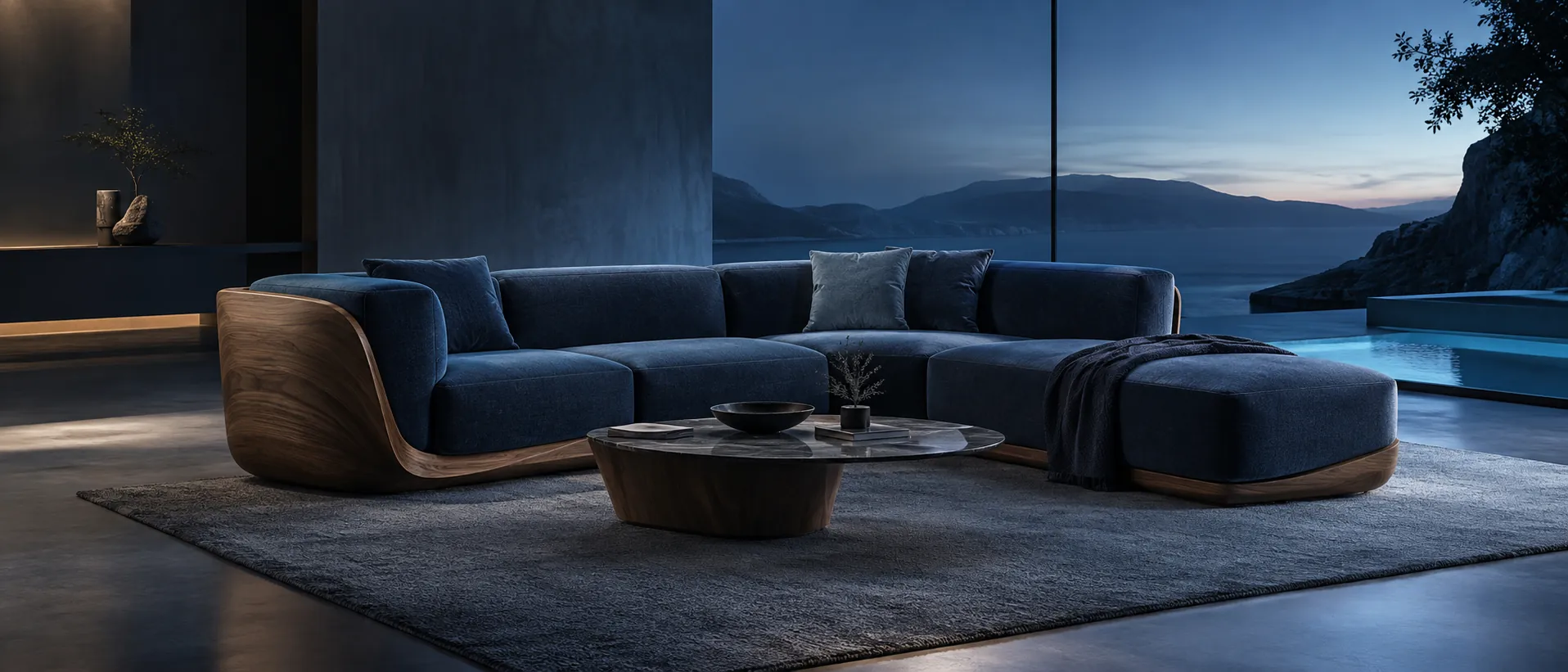
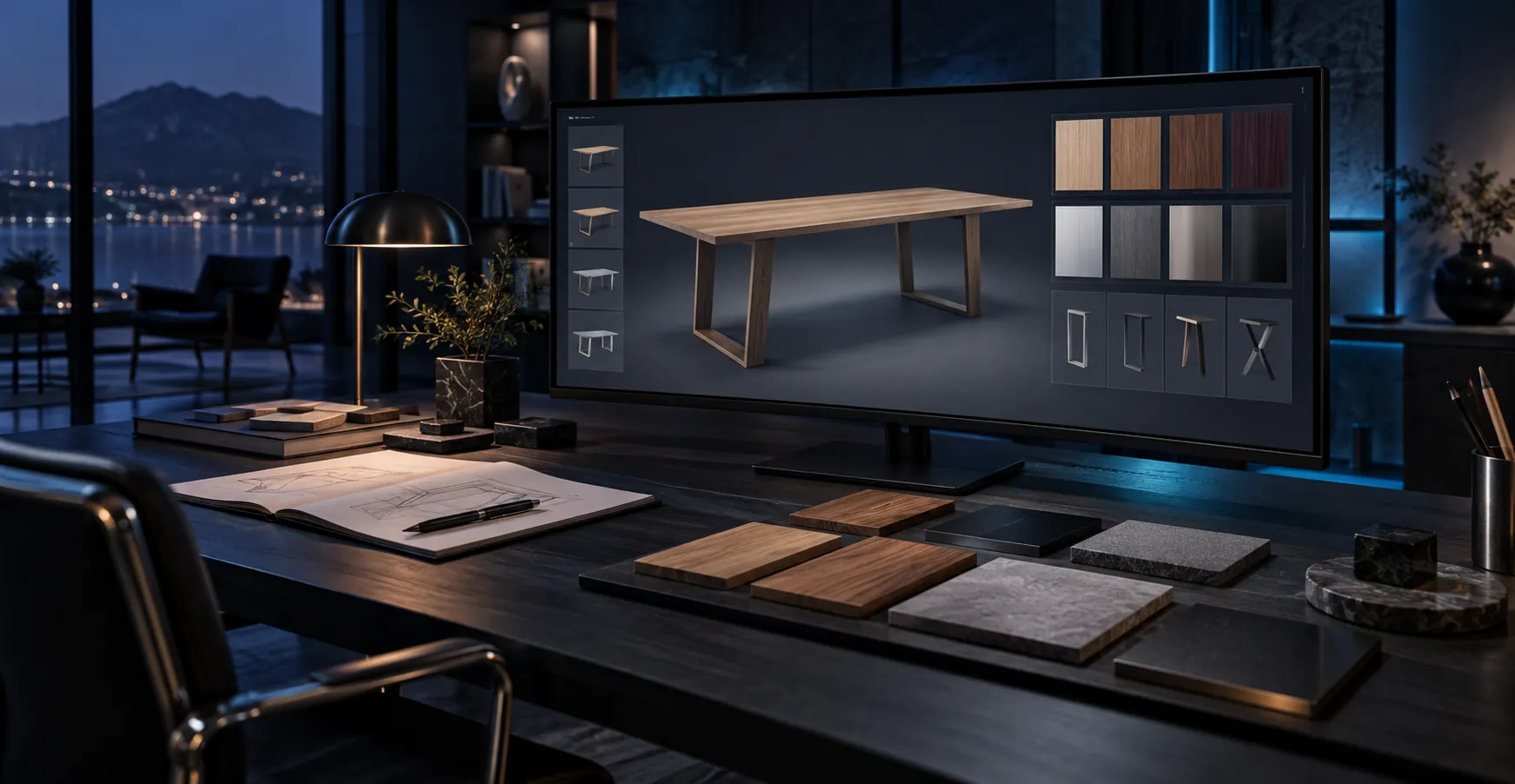
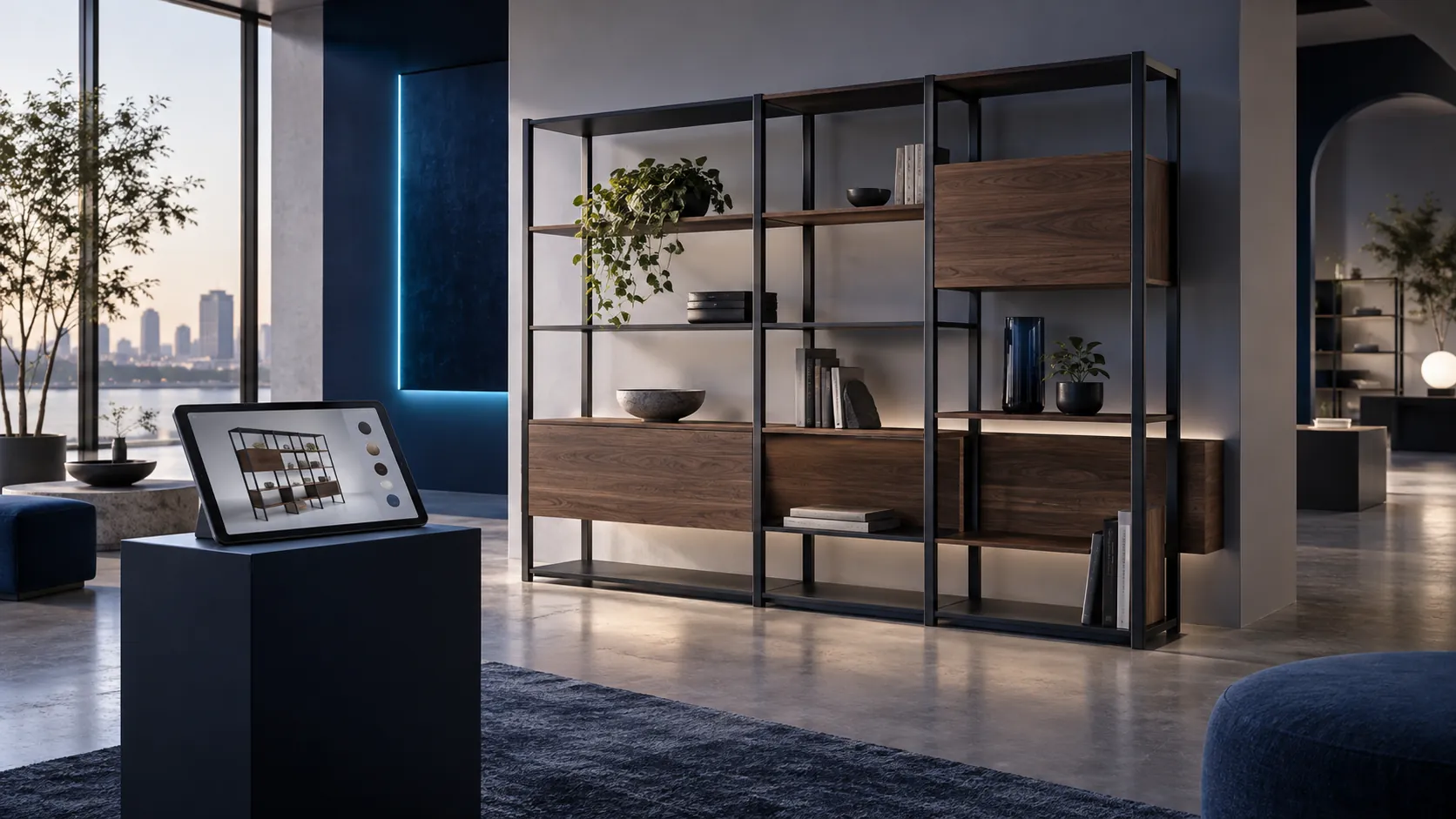
Furniture buyers need to see how a finish, layout or component changes the whole piece. A 3D furniture configurator can bring approved options into one product view instead of asking customers to imagine combinations from separate swatches and photographs. We design the real-time model, controls and journey around the range you actually sell.
01 / Our approach +
Start with the product rules
The useful starting point is one representative product, not an entire catalogue. We identify which choices change appearance, dimensions or compatibility, then test the model and interface on the intended devices before extending the range.
A chair with fabric choices needs a different system from modular storage with size and component rules. We review CAD, photography, dimensions, material references and the product data your team maintains. A prototype tests the most important option changes, visual fidelity and the path from a selected design to a product page, specification or enquiry. Pricing, stock, order and manufacturing logic are separate integrations that must be agreed with their system owners.
02 / Production scope
What we can build with you.
01
Furniture models and materials
+
Prepare representative products, components and approved finish libraries for responsive real-time viewing, with detail matched to the target screen.
02
Choice and layout controls
+
Design clear controls for the options customers need to compare, including compatible modules, dimensions or upholstery where the product rules support them.
03
Sales journey and handover
+
Connect the selected configuration to the agreed next step and document how models, materials and options will be maintained as the range changes.
Let visitors compare approved fabrics, woods or metals on a representative item while keeping lighting and colour expectations clear.
02
Modular furniture
+
Show valid sections and layouts for seating, shelving or storage ranges, with product rules supplied and approved by the manufacturer.
03
Assisted showroom sales
+
Give a sales team a shared view of product options during a conversation, linked to the specification or enquiry process they already use.
04 / Planning your project +
Make the visual choice match the real product.
A furniture configurator must stay aligned with the physical range. Decide who approves each finish, dimension, module and compatibility rule, and how revisions will be communicated. Test materials under the intended scene lighting, but do not treat screen colour as an exact sample. For large catalogues, establish a reusable asset and material process, then prove it on one difficult representative item before scaling. If room placement is required, specify device coverage and explain the limits of visual fit.
Bring the range and its rules.
A first conversation can begin with a single piece and its current product sheet. Show us the finishes, components and sizes people actually choose, plus combinations you do not sell. Tell us whether the end goal is an enquiry, a saved specification or a direct purchase. We can then identify which content and systems are ready for a pilot and which require further preparation.
Start with a conversation.
Share one representative furniture product, available models or photographs, the option list and where a selected configuration should lead.
Often as source material. CAD usually needs visual cleanup, materials, optimisation and review before it is suitable for a fast customer-facing experience.
Can customers enter custom dimensions?+
They can when dimensional ranges and valid combinations are part of the agreed product data. Visual controls alone cannot validate manufacturing constraints.
Does the configurator show live price and stock?+
Only if those systems and rules are included in the project scope. We establish the source of truth and integration requirements before promising live values.
Can the furniture appear in the customer’s room?+
An AR placement option can be scoped separately. It requires device testing, suitable model formats, scale checks and a useful fallback for unsupported devices.
06 / 3D furniture configurator
Tell us about the product choices.
Share one representative furniture product, available models or photographs, the option list and where a selected configuration should lead.