
How much does augmented reality app development cost in 2026?
A practical budget for a custom AR app can range from about $25,000 for a focused proof of concept to $250,000 or more for a polished, multi-platform product with advanced tracking, custom 3D content, integrations, analytics, and enterprise security. The useful number is not a universal average. It is the cost of the smallest version that can prove your business case under real operating conditions.
This guide explains what changes an AR budget, how project types compare, which recurring costs are easy to miss, and how to request a quote that can survive production. It is written for product owners evaluating augmented reality applications and experiences, retail visualization, guided workflows, training, marketing activations, and other custom spatial products.
Table of Contents
How Much Does AR App Development Cost in 2026?
For planning purposes, a narrow AR prototype commonly begins around $25,000 to $50,000. A production-ready mobile AR application with a designed user journey, stable tracking, several 3D assets, content management, analytics, and quality assurance often falls around $60,000 to $150,000. Complex enterprise or consumer products can reach $150,000 to $250,000 or more, especially when they require photoreal assets, persistent spatial content, multi-user interaction, computer vision, commerce, or deployment across several device families.
These are directional market ranges, not a fixed Mimic XR price list. A credible estimate starts with the use case, target users, devices, environment, content volume, integration requirements, and success metric. An AR product configurator for one furniture collection is fundamentally different from a collaborative headset application that maps an industrial facility and synchronizes live operational data.
The cost question is best reframed as: what must the first release prove? A retailer may need to prove that shoppers engage with true-scale visualization and convert more confidently. A manufacturer may need to prove that hands-free instructions reduce errors. A learning team may need to prove that an interactive scenario transfers skill better than video. Defining that outcome keeps the budget connected to measurable value.
For customer-facing placement, review the AR product visualisation service and the guide to immersive product visualization. These use cases require different content pipelines, UX decisions, and measurement plans than entertainment or field support.
AR App Cost by Project Type
A marker-based campaign or product demo is usually the least expensive category because the experience activates from a known image, package, poster, or QR-linked surface. A focused version may sit near the lower end of the budget range when it uses a limited number of optimized assets and does not need complex accounts, commerce, or back-office tools.
Markerless mobile AR costs more when the app must detect planes, estimate scale, place objects convincingly, handle lighting, and keep content stable while the user moves. Furniture, machinery, fashion, beauty, and product visualization frequently belong here. The experience must also cope with different cameras, processors, screen sizes, room conditions, and user behavior.
An enterprise guidance application adds authentication, permissions, content versioning, remote assistance, device management, reporting, and integrations with learning systems, product databases, or maintenance records. A shared or persistent AR environment introduces spatial anchors, networking, synchronization, identity, and conflict handling. Those capabilities can move a project into six figures even when the visible interface appears simple.
Focused proof of concept: one core interaction, limited devices, sample content, and enough instrumentation to validate feasibility.
Production mobile AR: polished onboarding, reliable tracking, optimized 3D assets, analytics, content updates, accessibility, and store release readiness.
Enterprise AR workflow: secure login, role-based content, offline behavior, reporting, system integration, device administration, and support.
Advanced spatial product: persistent anchors, multi-user collaboration, AI or computer vision, custom hardware support, or large content libraries.
To choose the right medium, compare the difference between VR, AR, and MR before technical scoping begins.
What Factors Increase AR Development Cost?
The largest cost driver is rarely a single feature name. It is the amount of uncertainty the team must resolve. A familiar image-tracking experience built with mature tools is easier to estimate than an application expected to recognize changing objects in poor light, understand an unfamiliar workspace, and guide a user safely without network access.
Tracking complexity matters. Image markers and simple plane placement are relatively predictable. Object recognition, body or face tracking, occlusion, depth, large-space mapping, geospatial alignment, and persistent anchors require more engineering, testing, and fallback behavior. Precision also changes the answer: a playful filter can tolerate drift that would be unacceptable in a product-fit or maintenance workflow.
3D content can equal or exceed software cost. Existing CAD may still require retopology, materials, animation, level-of-detail versions, and mobile optimization. Photoreal characters or scanned environments add specialist labor. The 3D scanning and photogrammetry service and photogrammetry guide explain why capture is only the beginning of a real-time asset pipeline.
Platforms and devices: iOS, Android, web AR, headsets, and rugged enterprise hardware each add implementation and testing work.
Content volume: every product, scenario, language, character, animation, or environment must be created, optimized, reviewed, and maintained.
Integrations: commerce, CRM, product information, learning systems, identity, telemetry, and live data need secure interfaces and error handling.
Quality requirements: photorealism, exact scale, low latency, offline operation, accessibility, and safety-critical behavior increase verification effort.
Collaboration and AI: shared sessions, smart avatars, speech, vision models, and personalized content introduce infrastructure, privacy, and operational cost.
Projects involving lifelike guides should scope smart avatars and NPCs separately because character design, animation, conversation behavior, moderation, and inference form their own workstream.
How Long Does AR App Development Take?
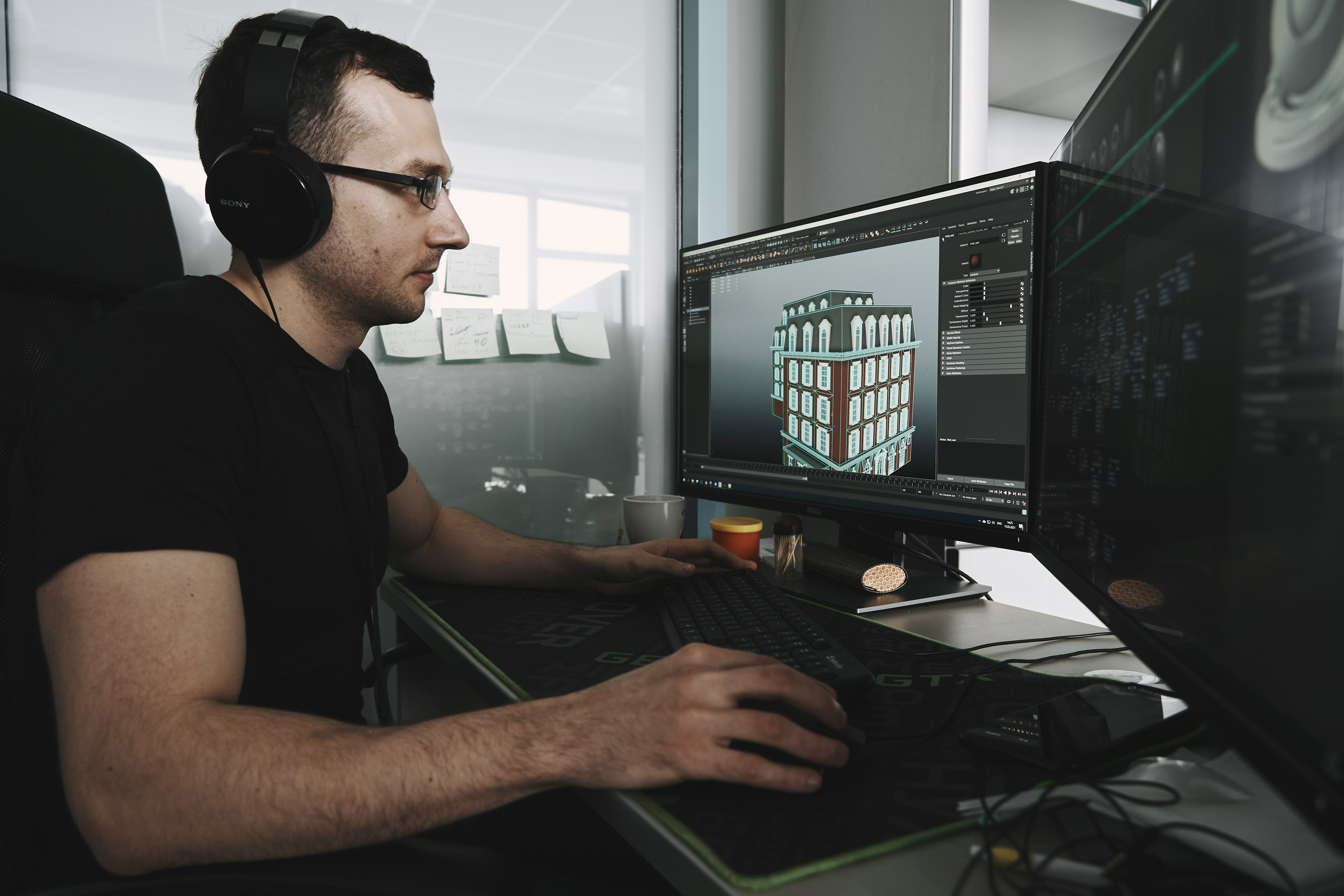
A focused discovery and prototype phase may take four to eight weeks. A production mobile AR app often needs three to six months. Complex enterprise, multi-user, or hardware-specific programs can require six to twelve months or more. Schedule depends on decision speed and asset readiness as much as engineering capacity.
Discovery converts an idea into a testable scope. The team documents users, environments, devices, technical risks, content inventory, integrations, privacy needs, and success metrics. A prototype then attacks the riskiest assumption: tracking stability, interaction comfort, visual fidelity, recognition accuracy, or workflow fit. This stage should produce evidence, not merely an attractive demo.
Production adds UX, application architecture, content pipelines, analytics, error states, accessibility, security, and deployment tooling. Testing must happen on real target devices and in representative lighting, spaces, network conditions, and user workflows. AR quality cannot be certified from a desktop emulator alone because sensing and physical context are part of the product.
Weeks 1 to 3: goals, users, device strategy, content audit, technical discovery, and acceptance criteria.
Weeks 3 to 8: interaction prototype, tracking tests, sample 3D assets, field trials, and scope refinement.
Months 2 to 5: production development, asset creation, backend and analytics integration, and iterative user testing.
Final 3 to 6 weeks: performance tuning, accessibility, privacy review, distribution, training, documentation, and launch support.
Training teams can compare this process with the XR training simulations service and the enterprise XR implementation roadmap. Both favor staged validation before broad rollout.
What Hidden and Ongoing Costs Should You Budget For?

The initial build is only part of total cost of ownership. AR applications depend on device operating systems, SDKs, cloud services, content, analytics, and distribution channels that continue to change. A realistic business case includes launch, maintenance, measurement, and content operations for at least the first year.
3D assets need governance. Product geometry changes, materials are updated, campaigns rotate, and training procedures evolve. Without a repeatable intake, optimization, approval, and publishing workflow, every update becomes a miniature development project. A content management layer costs more initially but can reduce recurring engineering work when non-developers need to publish approved content.
Cloud and third-party services may charge for storage, delivery, maps, computer vision, AI inference, authentication, video, collaboration, or device management. App stores and enterprise distribution add compliance and release work. Privacy, consent, accessibility, localization, and security reviews can be substantial for healthcare, education, employee, or public-facing deployments.
Compatibility testing after operating system, browser, headset, engine, or SDK updates.
New 3D assets, product variants, animations, languages, audio, and seasonal content.
Hosting, analytics, maps, AI inference, video streaming, remote assistance, identity, and monitoring.
User support, device setup, training, documentation, store reviews, security testing, and incident response.
Measurement and iteration after users reveal drop-off points, tracking failures, or confusing interactions.
Reserve a meaningful annual percentage of the build budget for maintenance and improvement, then estimate variable cloud or AI usage separately. The correct figure depends on release frequency, device diversity, service-level commitments, and content volume. Ask vendors to separate one-time production costs from monthly services and optional changes.
How Can You Reduce AR App Development Cost?
The best cost reduction is disciplined scope, not lower quality. Begin with one audience, one environment, one primary task, and one measurable outcome. If the first release tries to serve sales, training, support, marketing, and collaboration simultaneously, architecture and content burden expand before any value has been proven.
Choose the lightest interaction model that solves the problem. A marker may be better than complex object recognition. A mobile experience may reach the audience more efficiently than dedicated headsets. A guided sequence may be more reliable than unrestricted exploration. Reuse mature SDK capabilities when they meet the requirement, but document vendor dependence and migration risk.
Design the 3D pipeline early. Inventory existing CAD, product photography, scans, animation, brand materials, and rights. Test a representative difficult asset before estimating hundreds of similar items. Define polygon, texture, file-size, device-performance, and visual-approval standards so the content team does not create assets the target hardware cannot run.
Fund discovery and a risk-focused prototype before committing to the full feature list.
Prioritize one platform or device family for the first validated release.
Separate must-have launch requirements from experiments and later roadmap items.
Use modular content and reusable interaction patterns instead of bespoke logic for every scene.
Write acceptance criteria for tracking, scale, frame rate, offline behavior, analytics, and accessibility.
Request estimates by phase, deliverable, assumption, exclusion, dependency, and change-control method.
When comparing partners, ask for relevant evidence plus plans for testing, content, deployment, maintenance, and ownership. Mimic XR also provides mixed reality solutions and virtual world development when a mobile proof of concept may expand into a shared spatial platform.
Frequently Asked Questions
What is the average AR app development cost?
A focused proof of concept may begin around $25,000 to $50,000, while a production mobile app often falls around $60,000 to $150,000. Advanced products can exceed $150,000 to $250,000. Scope and risk matter more than an industry average.
Why are AR apps more expensive than standard mobile apps?
AR adds camera input, real-time tracking, spatial mapping, 3D rendering, device-specific performance work, and physical-environment testing. It also needs specialized design and content skills.
How much does a simple AR prototype cost?
A narrow prototype designed to test one interaction or technical risk may start around $25,000, although a simpler feasibility experiment can be lower and a high-fidelity prototype can be higher.
How much does an AR product visualization app cost?
Cost depends on asset count and condition, visual accuracy, scale, configuration rules, commerce integration, platforms, analytics, and content updates.
Is web AR cheaper than a native AR app?
Web AR may lower cost for a focused campaign, but it has browser and device limits. Native development can provide deeper sensor access, graphics, offline features, and platform capabilities.
How long does it take to build an augmented reality app?
A focused prototype may take four to eight weeks, a production mobile AR app often takes three to six months, and complex programs can take six to twelve months or longer.
Does AR app development include 3D models?
Not automatically. Confirm asset count, source quality, optimization, animation, materials, revisions, rights, and future update ownership.
What ongoing costs follow an AR app launch?
Typical costs include compatibility maintenance, hosting, analytics, cloud or AI services, security, content updates, new assets, releases, support, measurement, and improvements.
What information is needed for an accurate quote?
Provide the goal, users, environment, devices, interactions, content inventory, integrations, security needs, offline requirements, timeline, usage, success metrics, and visual references.
How do I choose an AR app development company?
Look for relevant shipped work, discovery, real-device testing, integrated 3D capability, transparent assumptions, security planning, maintainable architecture, ownership terms, and support.
Conclusion
AR app development cost in 2026 is shaped by interaction complexity, platforms, 3D content, integrations, quality targets, and operating needs. A focused prototype can validate the riskiest assumption before a business funds a complete product, while a defined content and maintenance plan prevents the launch budget from hiding the true cost of ownership.
Planning an AR product, visualization tool, guided workflow, or spatial experience? Explore Mimic XR services or contact the Mimic XR team to turn your use case into a phased scope, technical plan, and production estimate.