What should you ask a VR game studio before committing to production?
Choose a virtual reality game development company by testing how it turns your idea into a playable build on your target headset. A showreel can demonstrate visual quality, but it cannot tell you who will own the gameplay code, how unfamiliar players will learn the controls, or what happens when a milestone fails its agreed tests. Those questions belong in the first conversation.
For a publisher, brand or production team, the useful starting point is a defined commissioning decision: full game production, a vertical slice, or a specific contribution to an existing project. This guide explains how to compare studios on that basis. It complements Mimic XR’s XR game development service with a practical brief, evidence requests and review criteria you can use before approving the next phase.
Table of Contents
Brief a virtual reality game development company clearly

Bring the discussion back to the player. Describe what someone does repeatedly, why that action is satisfying, and where the session takes place. “A VR puzzle game for first-time visitors at a staffed event” is a different assignment from “a replayable home release with online progression.” Even if both begin with the same environment, their onboarding, reset behaviour, support and publishing requirements will differ. Share the constraints you already know, and label the rest as questions rather than quietly turning assumptions into requirements.
Separate three possible engagements before requesting estimates. Full production needs an owner for the application and release plan. Co-development needs interfaces with your existing team, repository and review process. Asset production needs technical specifications for what will enter someone else’s build. A company can be a strong fit for one arrangement without taking responsibility for all three. If your main requirement is environments or characters, review the scope of 3D modelling and asset creation before commissioning a complete game. For wider questions about the delivery relationship, use the separate XR development partner guide.
Player and setting: who will play, their likely headset experience, expected session length and whether a facilitator is present.
Target platform: the specific minimum headset, controller or hand-input requirement, play-space assumptions and intended distribution route.
Next decision: what a prototype must prove before you approve further production, such as understandable object interaction or a repeatable puzzle loop.
Content boundary: the number of environments, characters, interactions and languages being estimated, with stretch ideas listed separately.
Responsibilities: who supplies brand assets, reviews builds, recruits testers, approves changes and operates any connected services.
Consider a hypothetical museum commission: visitors must place three objects in the correct order to unlock a short scene. Its first milestone might include one room, three interactable objects, a clear failure response and a complete reset. That is enough to test whether visitors understand the mechanic. Additional rooms and collectible systems can wait for evidence. This example is a planning exercise, not a Mimic XR case study. Write a similarly concrete first milestone for your own virtual reality game development project, then ask each studio to estimate the same scope.
Compare studio evidence and the people doing the work

Ask each shortlisted studio to walk through a relevant playable build and identify its exact contribution. Did it design the interaction, implement the game systems, create the art, optimise an existing project, or deliver the whole application? A portfolio logo does not answer that question. Request a demonstration on comparable hardware and discuss one production constraint the team encountered. Useful answers describe what was changed, how it was tested and what remained outside the studio’s scope. Confidential client work may limit access; an agreed demonstration or a relevant prototype can provide alternative evidence.
Meet the people expected to lead design, engineering, art and quality assurance. Establish who can make decisions when a creative idea conflicts with the target device’s performance limits. Ask how much of their time is allocated to your project and who covers absences. The same conversation should clarify your own producer’s responsibilities. Daily access to a large chat channel is not a substitute for an accountable delivery lead, a shared decision log and a regular playable review. Mimic XR’s production process provides context for discussing these stages with the studio.
Gameplay evidence: request an example of interaction feedback, player onboarding and a complete start-to-finish loop, rather than only a cinematic capture.
Art integration: ask how assets are checked in-engine. If the commission includes a world, distinguish environment production from navigation, game logic and save systems.
Character scope: separate modelling, rigging, animation, dialogue and runtime behaviour. Digital human and avatar production can be one defined contribution within a larger game.
Technical explanation: ask why the proposed engine and packages suit the target devices and maintenance plan. Use the VR development software guide for the detailed engine-selection discussion.
Compare proposals against the same evidence requests and record “not demonstrated” when evidence is missing. Avoid converting an unanswered question into a positive score because the presentation looked polished. Cross-platform claims also deserve a precise explanation. Khronos describes OpenXR as a cross-platform API, but using it does not remove the need to test device-specific behaviour, performance and extensions. A credible studio should name the devices it will validate, the features it expects to share and the adaptations that may require additional work. This makes competing virtual reality game development services easier to compare without relying on a generic list of supported technologies.
Approve a playable milestone before expanding production

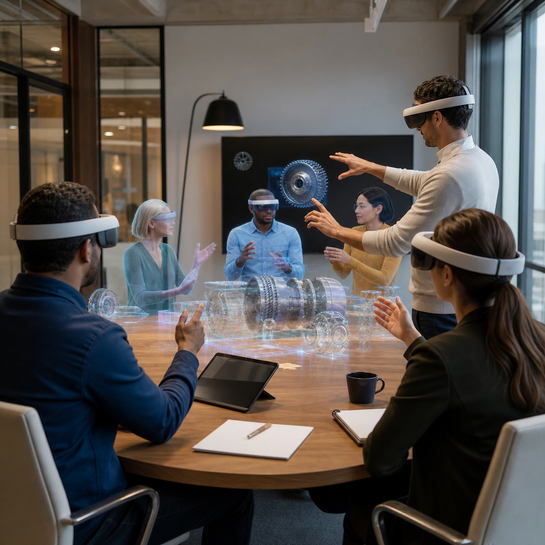
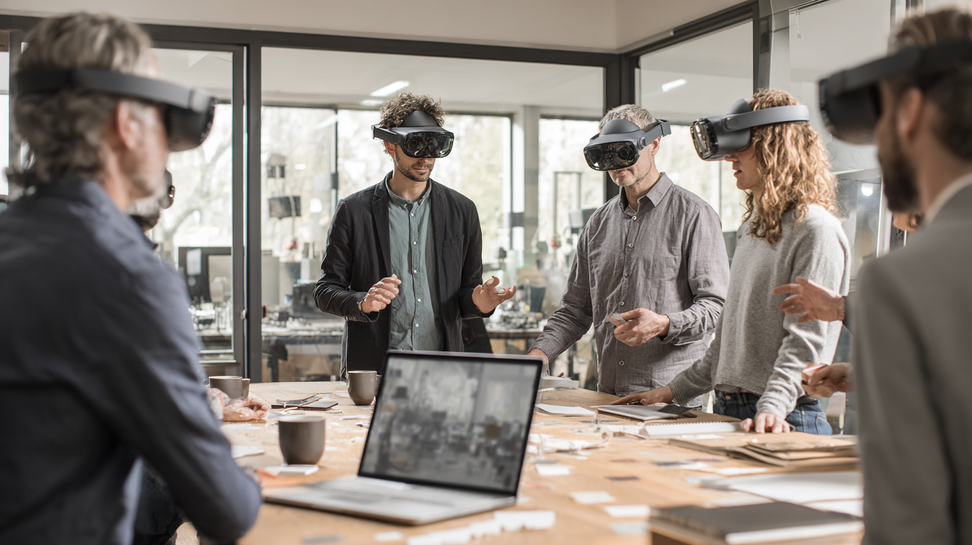
Give the first milestone a short, observable acceptance checklist. For a puzzle, the player should be able to identify an object, pick it up, receive feedback, complete the task and restart without developer intervention. For a movement-heavy game, the milestone should test the movement mechanic early. Agree what will be represented with temporary art and what needs representative production assets. Otherwise, one reviewer may approve the mechanic while another assumes that every placeholder will be replaced within the same budget. The stock photographs in this guide illustrate users and collaboration; they are not images of a commissioned Mimic XR game.
Review the build on the agreed headset, with people who have not memorised the controls. Observe where they hesitate before explaining the interface. Record whether they can read prompts, reach interactive objects and recover from mistakes. Ask the development team to distinguish an isolated test session from a wider validation programme; a few successful attempts cannot establish that every player will be comfortable. Unity’s VR guidance identifies stable performance, movement choices and head-tracked camera behaviour as relevant comfort considerations. The acceptance plan should turn the options appropriate to your game into tests on its actual hardware.
Interaction: can a new player understand grabbing, selection, feedback, pause and reset? Check the supported input modes explicitly.
Comfort and access: evaluate the agreed seated or standing mode, turning options, readable UI and reachable objects with the intended audience.
Performance: request measurements from representative scenes on the minimum device. Agree the target frame-time budget and the conditions used to measure it.
Failure recovery: test interrupted sessions, tracking loss and reconnection where applicable. Confirm that the game returns to a usable state.
Decision record: document accepted behaviour, unresolved defects and changes requested outside the original scope before approving the next milestone.
Then use the findings to decide what to build next. An unclear mechanic may need another prototype pass; a successful loop may justify a more polished vertical slice. These are separate decisions from producing every level or preparing a store submission. For a training game, the acceptance criteria must also address the intended learning task and how performance is assessed, which belongs in the VR training simulation scope. Keep testing focused on the purpose of the experience, rather than adding features because a demo made them look easy. Each additional input mode, networked feature or progression system needs an owner and a test plan.
Compare costs, delivery terms and the handover plan

Ask for estimates broken down by milestone, deliverable and assumption. A single total is difficult to compare when one proposal includes content integration and testing while another covers only programming. List the work supplied by your team and the work supplied by the studio. Separate prototype costs from production, release preparation and continuing support. There is no useful universal price for an unspecified VR game: content volume, custom interactions, platform coverage, multiplayer requirements and review cycles all change the amount of work. A smaller first commitment can make the later estimate better informed.
Make changes visible as the project develops. When someone requests another room or a new interaction, record the effect on content, testing and delivery dates before accepting it. Decide who can approve those changes and how long your team has to review a build. Likewise, distinguish a defect against agreed behaviour from a new preference discovered during review. This is a practical production distinction to agree with the team; the final commercial wording belongs in your organisation’s reviewed agreement. Keep a record of decisions alongside the delivered builds so a new stakeholder can understand why the scope changed.
Release work: identify the party responsible for platform accounts, submission materials, localisation and responses to review feedback. A prepared build does not guarantee platform approval.
Ongoing services: identify who operates multiplayer infrastructure, analytics or other connected systems, if these are included. Ask for usage assumptions and recurring-cost ownership.
Source and assets: specify the repository, editable project files, required tool versions, asset inventory and third-party dependencies expected at handover.
Reproducible build: have the receiving team build and run the project using the supplied instructions before closing the handover milestone.
Support: define the maintenance period, response process, supported devices and how engine or platform updates will be assessed after launch.
A useful final meeting walks through the deliverables rather than repeating the sales presentation. Open the project, locate the build instructions, review the remaining issues and confirm who has access to the required accounts. If your team will operate an event installation, rehearse the startup, reset and shutdown routine as well. The goal is a game your organisation can review, release and maintain with clear responsibilities. Keep this checklist attached to your request for proposals so shortlisted virtual reality game development companies are responding to the same operational expectations, not merely to the same creative theme.
Frequently asked questions
What does a virtual reality game development company do?
It can provide game design, interaction programming, real-time art, testing and release preparation. The exact responsibility depends on the commission. Ask whether the company will own the full application, work alongside your existing developers, or deliver a defined part such as environments or characters. Those arrangements require different briefs and acceptance criteria.
Should I commission a prototype or a complete game first?
Start with a prototype when the central interaction, target audience or technical feasibility remains uncertain. Define the decision it must support and keep its scope small. If you already have a tested design and established pipeline, a production engagement may be appropriate, but the proposal should still identify milestones and review conditions.
How can I compare VR game development quotes fairly?
Give every studio the same platform assumptions, content list and first milestone. Request separate estimates for art, engineering, testing, release preparation and support. Compare exclusions as carefully as included work. A lower total may represent a smaller scope, fewer supported devices or responsibilities left with your team rather than a lower price for equivalent delivery.
Is Unity or Unreal Engine more important than the team?
Choose the team and technical approach together. Ask for relevant experience in the proposed engine and a clear explanation of device support, workflow and maintenance. An engine name alone does not establish delivery capability. Request evidence from a comparable build and identify any specialist knowledge that would be difficult to replace after handover.
Is multiplayer normally included in the estimate?
Do not assume it is. Define the session model, number of players, account requirements, persistence and service operation separately. Networking changes testing and support responsibilities as well as gameplay. Ask which backend costs belong to your organisation and what the game should do when a player disconnects or the service becomes unavailable.
How long will a VR game take to develop?
A credible schedule depends on the scope and unresolved risks. Ask the studio to estimate discovery, prototype, content production, testing and release preparation separately, including your review time. A date without those assumptions is difficult to evaluate. Use the first playable milestone to reassess later estimates when the project has more concrete evidence.
What should my team receive at handover?
Agree the source project, editable assets, dependency inventory, build instructions, test results and known-issue list before production. Also identify the accounts and service access your team will need. The strongest practical check is whether the receiving team can create and run a build from the delivered materials without relying on an undocumented developer setup.
Can Mimic XR discuss a limited production contribution?
Yes. Mimic XR’s game development service describes both complete-build discussions and defined contributions such as gameplay prototyping or character production. Bring the current project state, target platform and the work you need next. The resulting scope should name the deliverables, interfaces with your team and evidence required for acceptance.
Conclusion
Select a virtual reality game development company through evidence you can inspect: a relevant build, a defined first milestone, an accountable team and a handover plan. Keep uncertain features visible as assumptions until they have been tested. This makes it easier to compare proposals and commit to the next phase with a clear understanding of what it will deliver.
Discuss your VR game brief with Mimic XR. Share the audience, target headset, core interaction and next decision so the team can discuss a practical starting scope.